SEO BLOG
How to Get Cited by Perplexity: 8 Steps That Actually Work
 Ganesh Shanmugam5 min read
Learn how to get cited by Perplexity in 8 practical steps. Discover how PerplexityBot finds pages, the firewall settings that block it, and what earns citations.
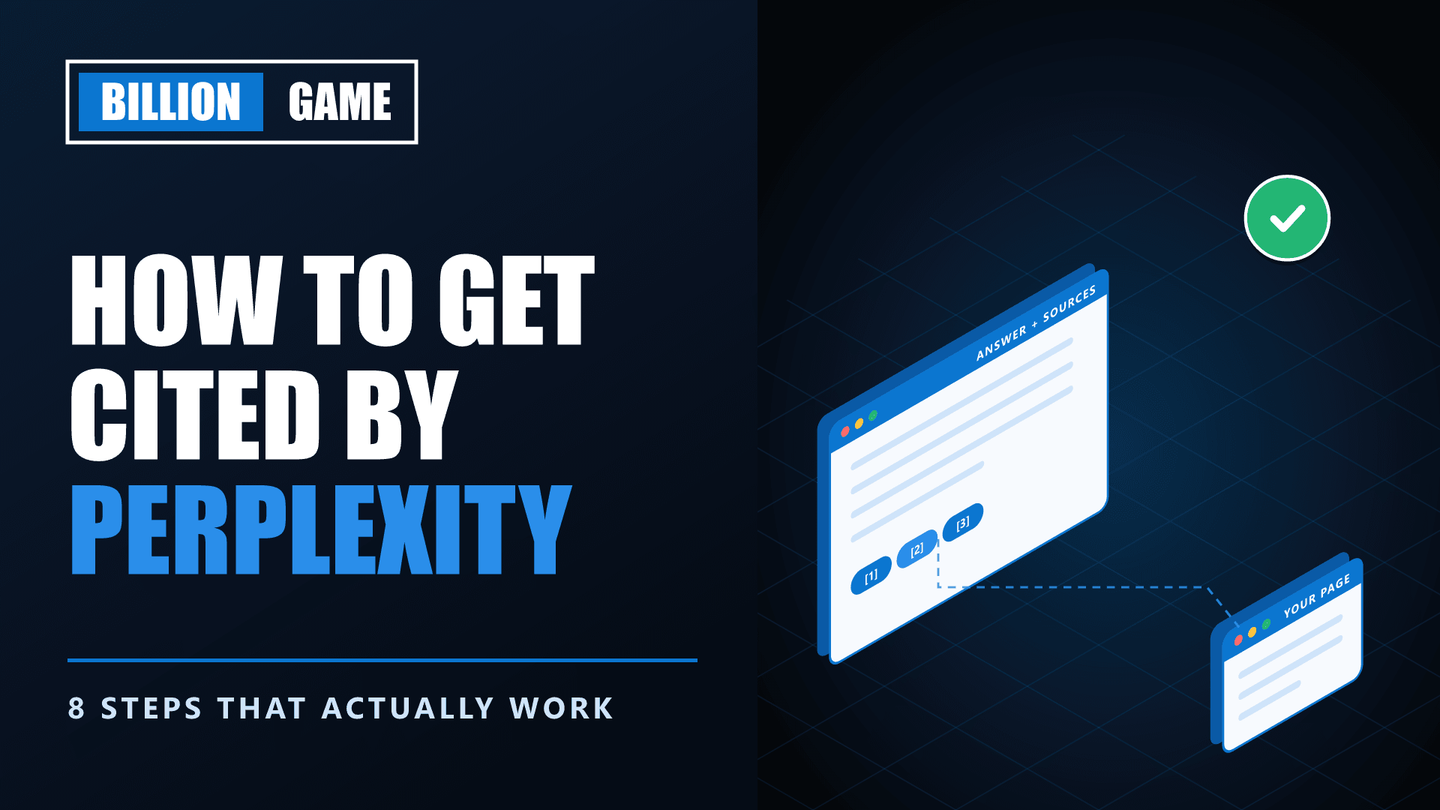
Perplexity does something ChatGPT often does not. It shows its sources, numbered and clickable, right beside every answer. For a business, that makes a Perplexity citation unusually valuable, because it comes with a visible link.
It also makes the gap painfully obvious. Ask Perplexity about your industry and you can see exactly which sites it trusts, and whether yours is among them. Learning how to get cited by Perplexity starts with its own crawler rules and ends with content worth quoting.
This guide covers eight practical steps, from technical access to the content and reputation signals that show up again and again in cited pages. It sticks to what Perplexity documents publicly, and says clearly where observation takes over from official guidance.
Key Takeaways
- PerplexityBot must be able to reach you. Perplexity recommends allowing it in robots.txt and permitting its published IP ranges.
- PerplexityBot is for search, not training. Allowing it does not feed your content into AI model training, according to Perplexity.
- Firewalls often block it. Perplexity publishes specific allow rules for Cloudflare and AWS firewalls.
- Direct answers get quoted. Pages that state answers clearly are easier to cite than long, vague ones.
- Specific facts beat generic advice. Numbers, dates and original data give Perplexity something concrete to reference.
- Third-party reputation matters. Community discussions and independent reviews appear frequently among Perplexity's sources.
How to Get Cited by Perplexity
Quick answer: To get cited by Perplexity, first allow PerplexityBot in your robots.txt and firewall so it can index your pages. Then publish pages that answer specific questions directly, back them with concrete facts, dates and original data, keep them updated, and earn genuine mentions on reputable third-party sites and communities. Test your progress by asking Perplexity your target questions and checking its sources.
The steps below follow that order: access first, content second, reputation third.
How Perplexity Finds and Cites Pages
Perplexity documents two user agents, and they behave differently.
| User agent | What it does | Respects robots.txt? |
|---|---|---|
| PerplexityBot | Indexes websites to surface and link them in Perplexity's search results. Perplexity says it is not used to train AI models. | Yes |
| Perplexity-User | Visits pages when a user's question needs them | Generally no, because a user requested the fetch |
PerplexityBot is the one that matters for citations, since it builds the index that answers draw from.
Step 1: Allow PerplexityBot in robots.txt
Open yourdomain.com/robots.txt and check that nothing blocks PerplexityBot, either by name or through a blanket rule for all bots. Perplexity explicitly recommends allowing it to ensure your site appears in its results.
You can test your file quickly with our free robots.txt tester.
Step 2: Allow It Through Your Firewall
This is where many sites fail without knowing it. Your robots.txt may allow PerplexityBot while your firewall silently blocks it.
Perplexity publishes setup guidance for this. For Cloudflare, it suggests a custom WAF rule that matches the PerplexityBot or Perplexity-User user agent and its official IP ranges, with the action set to Allow. For AWS WAF, it suggests IP sets combined with user-agent matching, placed above your blocking rules.
Also check your CDN's AI crawler settings. Cloudflare changed its defaults for new domains on 15 September 2026, keeping search crawlers allowed but blocking agent crawlers, such as user-triggered fetchers, on pages that display ads.
Step 3: Serve Your Content as Plain HTML
Make sure your main content appears in the page's HTML, not only after JavaScript runs. Crawlers that do not execute scripts may otherwise see an empty page. View your page source to confirm the text is there.
Step 4: Answer Questions Directly
Perplexity builds answers from passages it can quote. Pages that bury the answer are harder to use.
- Use headings phrased as the questions people ask.
- Put a clear, direct answer in the first sentence or two under each heading.
- Follow with detail, examples and context.
This structure also helps readers, which matters just as much.
Step 5: Include Specific, Verifiable Facts
Vague statements give an answer engine nothing to cite. Concrete ones do.
Compare "SEO takes time" with "Clutch's research puts the typical SEO engagement at around 12 months." The second is a fact with a source, and it is exactly the kind of sentence answer engines tend to quote. Wherever you can, include numbers, dates, named sources and original data from your own work.
Step 6: Keep Pages Current
Many questions have time-sensitive answers, such as prices, rules, tools and statistics. Update key pages when facts change, and show the date of your last update so readers and crawlers can see the page is maintained.
Step 7: Build Genuine Third-Party Reputation
When you test prompts in Perplexity, notice how often its sources include community discussions, independent reviews and industry publications rather than brand websites alone. Being mentioned credibly in those places raises your chances of being part of an answer.
That means earning coverage the honest way: expert commentary, useful contributions to real discussions, and digital PR that journalists and editors want to reference. Avoid planting fake posts or reviews. Google's own AI guidance warns that seeking inauthentic mentions is not as helpful as it might seem, and online communities quickly remove and remember promotional accounts.
Step 8: Test and Track Your Citations
Ask Perplexity the questions your buyers ask, then open the sources for each answer.
Record whether you are cited, which page is cited, and which competitors appear. Run the same questions every month. Our guide on how to check if ChatGPT knows your brand sets out a scoring method that works for Perplexity too.
Common Reasons Perplexity Ignores a Site
| Problem | Quick check |
|---|---|
| PerplexityBot blocked in robots.txt | Open your robots.txt file |
| Firewall or CDN blocking | Review WAF and AI crawler settings |
| Content hidden behind JavaScript | View the page source |
| Answers buried in long introductions | Read the first lines under each heading |
| No specific facts or sources | Look for numbers, dates and references |
| No third-party mentions | Search your brand name outside your own site |
Many of these overlap with ChatGPT visibility too. Our guide on why your website is not showing in ChatGPT covers the OpenAI side.
Frequently Asked Questions
How does Perplexity find its citations?
Perplexity uses its PerplexityBot crawler to index websites, then selects pages from that index to support each answer. It shows those pages as numbered sources beside the response.
What gets you cited in Perplexity answers?
Crawler access comes first. After that, pages that answer questions directly, include specific facts and sources, stay current and have credible third-party mentions are the ones that appear most often.
Does allowing PerplexityBot mean my content trains AI models?
According to Perplexity, no. It states that PerplexityBot surfaces and links websites in search results and is not used to crawl content for AI foundation models.
Can I get cited by Perplexity using LinkedIn or Reddit?
Genuine contributions on platforms Perplexity cites can help your brand appear in answers. However, promotional or fake posts tend to be removed and can damage your reputation, so contribute real expertise.
How long does it take to get cited by Perplexity?
Once PerplexityBot can crawl your site, citations depend on relevance and reputation. Technical fixes can help quickly, while authority builds over months.
Final Thoughts
Perplexity rewards the same things good readers value: open access, direct answers, specific facts and a credible reputation. The difference is that it shows its sources, so you can see exactly where you stand.
Start with access, since a blocked crawler makes everything else irrelevant. Then build content and reputation worth quoting. If you want specialists to handle it, our AEO services cover the full process. Follow these steps and you will know exactly how to get cited by Perplexity, and how to measure your progress.
Share
Ready to Hire an AI SEO Expert?
Book a free 30 minute AI Visibility Audit. We analyze your search visibility across Google, ChatGPT, Perplexity AI and AI Overviews.
About the author

Ganesh Shanmugam
Ganesh Shanmugam is an SEO and AEO consultant based in Chennai, India, and the founder of Billion Game — a boutique agency serving clients across the US, UK, Australia, Canada, and Ireland. He previously held SEO roles at 7 Eagles and Digital Scholar before going independent, and brings 4+ years of hands-on experience
AI SEO insights in your inbox
For growth-stage brands: organic traffic, AI citations, and strategy notes. No spam—unsubscribe anytime.
By subscribing you agree to our Privacy Policy.