INDEXING
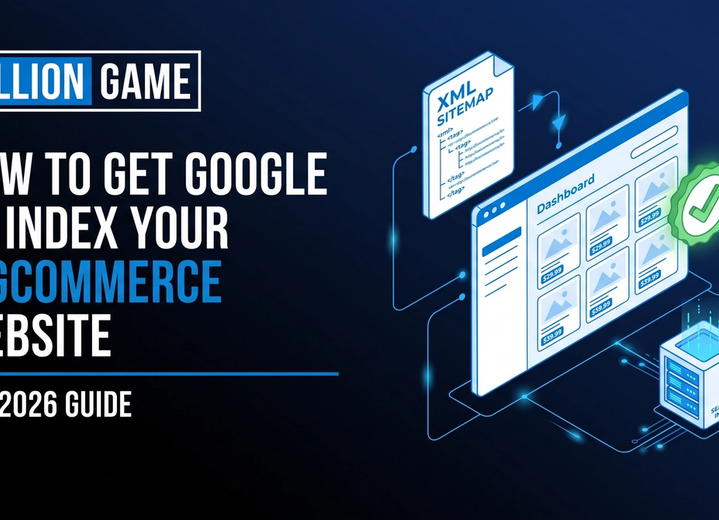
How to Get Google to Index Your WooCommerce Website (2026 Guide)
 Ganesh Shanmugam6 min read
Learn how to get Google to index your WooCommerce store. Discover how product variations create duplicate URLs, and the plugin settings that fix indexing.

One product. Five colours. Three sizes. Fifteen URLs Google now has to make sense of.
That multiplication is the defining indexing problem on WooCommerce, and it is why stores with a few hundred products end up with thousands of crawlable URLs. If you want to get Google to index your WooCommerce website reliably, controlling variation and attribute URLs matters more than anything else you do.
This guide covers that first, then the WordPress setting that hides entire sites by accident, the plugin configuration most stores get wrong, and how to verify what Google actually holds.
Key Takeaways
- Product variations are the leading source of duplicate content. A product with five colours and three sizes can generate fifteen URLs if your theme exposes them.
- Yoast and Rank Math behave differently. Yoast WooCommerce SEO handles much of this on install, while Rank Math needs manual configuration.
- Check one WordPress setting first. Discourage search engines under Settings, then Reading, hides your entire store.
- Keep cart, checkout and account pages out of the sitemap. They should never be indexed.
- Rank Math publishes at /sitemap_index.xml, not the WordPress core path, so submit the right address.
- Attribute archives need a decision. Left indexable, they create large volumes of thin pages.
How to Get Google to Index Your WooCommerce Website
Five steps handle nearly every case.
- Confirm WordPress is not discouraging search engines.
- Configure your SEO plugin for WooCommerce properly.
- Control variation and attribute URLs.
- Submit the correct sitemap in Google Search Console.
- Verify what Google received on a live product URL.
Step 1: Check the Setting That Hides Entire Stores
Before anything technical, rule out the simplest cause.
Go to Settings, then Reading, and look for Discourage search engines from indexing this site. If that box is ticked, WordPress adds a noindex directive across the whole site and nothing you do elsewhere will help.
Developers tick it during builds and forget to untick it at launch. It is the single most common reason a finished WooCommerce store is completely absent from Google, and it takes seconds to check.
Step 2: Configure Your SEO Plugin for WooCommerce
WooCommerce relies on a plugin for sitemaps and indexing control, and the two main options behave differently.
Yoast WooCommerce SEO applies sensible defaults on installation, including canonical handling for variations. That convenience sits behind a paid add-on, separate from free Yoast.
Rank Math includes strong WooCommerce features in its free tier, including product schema and category-level meta configuration. However, it does not configure everything for you, so you must check the settings yourself.
For Rank Math specifically, go to Rank Math, then Titles & Meta, then WooCommerce, find Product Attributes, and set them to No Index. Leaving attribute archives indexable is how stores end up with hundreds of thin pages listing every product in a given colour.
Whichever plugin you use, confirm your sitemap excludes cart, checkout and account pages. Those exist for shoppers, not searchers.
Step 3: Control Variation and Attribute URLs
Here is the core problem, and it compounds quickly.
Every attribute combination can generate a parameterised URL that Google tries to index as an independent page. A single product with five colours and three sizes produces fifteen variation URLs when the theme exposes them. Across a modest catalogue that becomes thousands of near-identical pages competing for the same terms.
Handle it in three ways:
- Canonical tags. Both Yoast WooCommerce SEO and Rank Math can point variation URLs back at the main product URL, consolidating signals rather than splitting them.
- Sitemap exclusion. Keep variation URLs, cart, checkout and account pages out of the XML sitemap entirely.
- Attribute archives. Set these to noindex unless a specific archive genuinely earns its own page, which is rare.
Get this wrong and Googlebot spends its budget on colour permutations instead of your actual product pages. For larger catalogues this analysis is worth doing properly, which is what our ecommerce SEO work covers.
Step 4: Submit the Right Sitemap
WooCommerce stores can expose more than one sitemap path, so submit the one your plugin actually maintains.
Rank Math publishes at yourstore.com/sitemap_index.xml. Yoast uses yourstore.com/sitemap_index.xml as well. WordPress core outputs /wp-sitemap.xml, which your plugin usually disables when it takes over.
Open the address in a browser first and confirm it lists products and categories rather than returning an error or an empty file. Then:
- Add and verify the property in Google Search Console.
- Open Indexing, then Sitemaps.
- Submit the sitemap path and confirm it reports Success.
- Use URL Inspection on priority products and categories, then Request Indexing.
Should Search Console return errors you cannot interpret, our Google Search Console issue fixing service exists for that.
Step 5: Confirm What Google Actually Received
Inspect a live product URL and choose View Crawled Page.
Check the product title, description and price appear in the HTML, the canonical points at the main product URL rather than a variation, and no noindex directive is present.
To work out roughly when a page entered the index, our guide on how to check when a page was indexed by Google covers the closest available methods.
Why WooCommerce Products Still Do Not Get Indexed
When the setup is right and products still will not appear, these are the usual causes.
- Manufacturer product descriptions. Copy shared across dozens of stores gives Google no reason to prefer yours. Rewrite the descriptions on your bestsellers first.
- Variation URLs eating crawl budget. Covered above, and the most common issue at scale.
- Out of stock products. Long-term unavailable items often get dropped from the index.
- Slow hosting. WooCommerce is heavier than hosted platforms, and slow server responses reduce how much Google crawls.
- Orphan products. Items reachable only through search or filters get discovered slowly, so link them from categories and related product blocks.
- Pages sitting at Crawled, currently not indexed. A quality verdict rather than a technical fault, and our guide on fixing Crawled, currently not indexed explains what to do next.
If products still refuse to index after that, our Google indexing services handle the diagnosis.
Getting WooCommerce Products Into AI Answers
Google's index is now the floor rather than the goal, because a growing share of product research happens inside AI assistants that summarise rather than link.
Two things matter. First, check your robots.txt is not blocking AI crawlers such as GPTBot, ClaudeBot, PerplexityBot and Google-Extended, which is straightforward on WordPress. Second, structure product information so it can be extracted: specifications in tables, direct answers to common buying questions, and consistent brand naming.
Product schema helps here too, and both Yoast and Rank Math output it. That work sits under AEO services.
Frequently Asked Questions
Why is my WooCommerce store not showing on Google?
Check **Settings**, then **Reading**, for Discourage search engines from indexing this site. That single tick box hides entire stores and is the most common cause. After that, look at your sitemap and product descriptions.
Where is the WooCommerce sitemap?
It depends on your plugin. Rank Math and Yoast both publish at `yourstore.com/sitemap_index.xml`, while WordPress core uses `/wp-sitemap.xml`. Open the address in a browser to confirm which one is live.
Should I index WooCommerce product variations?
Generally no. Canonical them back to the main product URL and keep them out of the sitemap, otherwise a handful of products can generate thousands of near-identical URLs.
Rank Math or Yoast for WooCommerce?
Rank Math offers more in its free tier, including product schema and category-level meta. Yoast configures more automatically on install, though its WooCommerce features sit behind a paid add-on. Both work when configured properly.
How do I stop attribute pages being indexed?
In Rank Math, go to **Titles & Meta**, then **WooCommerce**, find **Product Attributes** and set them to **No Index**. Yoast handles much of this on installation of its WooCommerce add-on.
Does WooCommerce create a sitemap automatically?
Not on its own. WordPress core outputs a basic sitemap, though most stores rely on Yoast or Rank Math, which usually replace it.
How long does WooCommerce take to get indexed?
Days to a few weeks for a new store. Faster hosting, unique product descriptions and strong internal linking all shorten it.
Final Thoughts
WooCommerce gives you more control than any hosted platform, and that control is exactly why stores get indexing wrong. Nothing is configured for you.
Check the Discourage search engines setting, configure your SEO plugin properly for WooCommerce, canonical your variations, submit the right sitemap, then verify what Google actually received. Those five things resolve the overwhelming majority of cases.
If products still refuse to appear, the problem has usually moved from configuration to content, and duplicated manufacturer descriptions are the first place to look. Should you want help getting Google to index your WooCommerce website properly, our WooCommerce development and ecommerce SEO teams cover the whole setup.
Share
Ready to Hire an AI SEO Expert?
Book a free 30 minute AI Visibility Audit. We analyze your search visibility across Google, ChatGPT, Perplexity AI and AI Overviews.
About the author

Ganesh Shanmugam
Ganesh Shanmugam is an SEO and AEO consultant based in Chennai, India, and the founder of Billion Game — a boutique agency serving clients across the US, UK, Australia, Canada, and Ireland. He previously held SEO roles at 7 Eagles and Digital Scholar before going independent, and brings 4+ years of hands-on experience
AI SEO insights in your inbox
For growth-stage brands: organic traffic, AI citations, and strategy notes. No spam—unsubscribe anytime.
By subscribing you agree to our Privacy Policy.