INDEXING
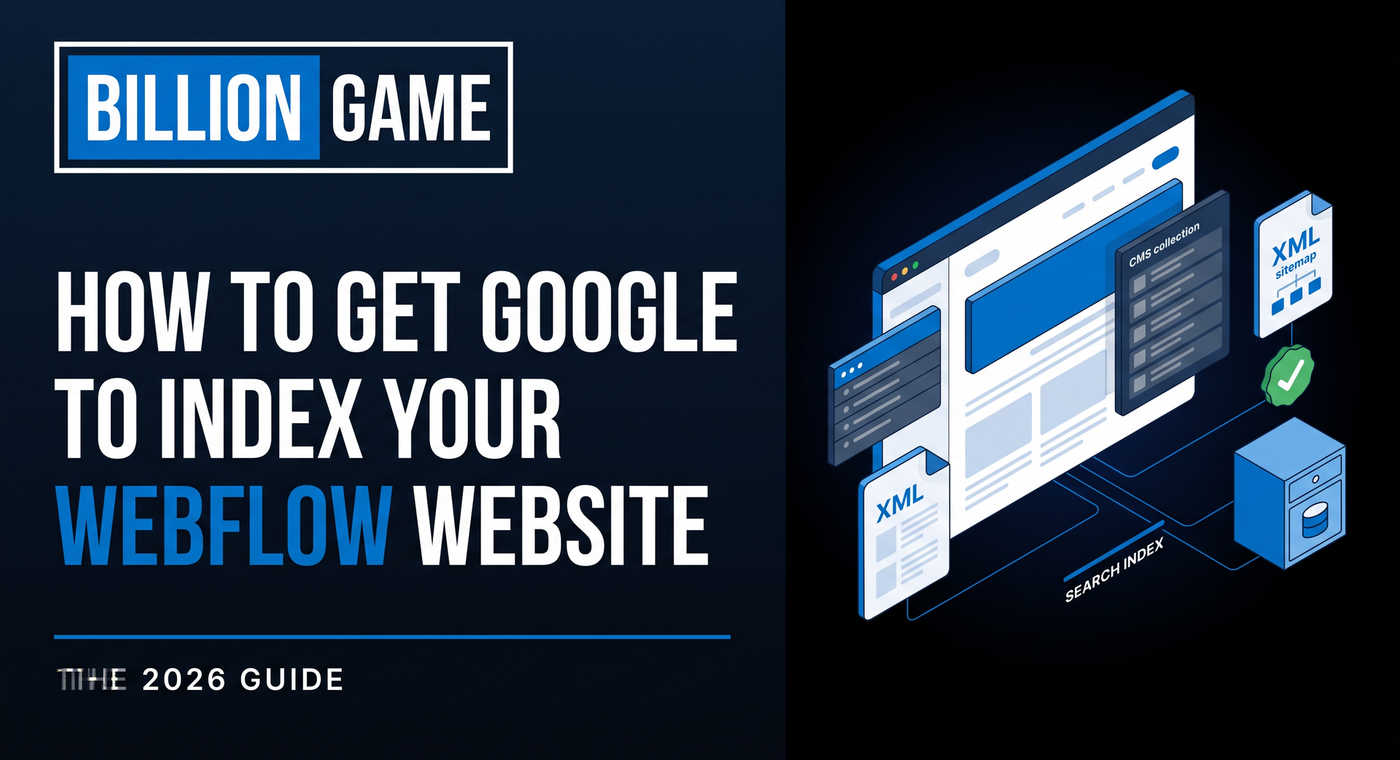
How to Get Google to Index Your Webflow Website (2026 Guide)
 Ganesh Shanmugam6 min read
Learn how to get Google to index your Webflow website. Discover the staging subdomain trap, sitemap settings, and the checks that fix indexing problems fast.
Search your brand name and something odd comes back. Your site appears, but at a webflow.io address rather than your own domain.
That is the single most damaging indexing problem Webflow creates, and it catches people who have otherwise done everything right. So if you want to get Google to index your Webflow website properly, the staging subdomain is where to start, before sitemaps or anything else.
This guide covers that trap, how to clean it up if it has already happened, the per-page settings that quietly remove pages from search, and how to confirm what Google actually holds.
Key Takeaways
- Webflow gives you two live copies of your site. Your custom domain and a yoursite.webflow.io staging subdomain, both publicly reachable.
- That is duplicate content. Google may index the staging version, or split ranking signals between both, weakening each.
- One setting fixes it. Disable Webflow subdomain indexing in Project Settings, under the SEO tab.
- Webflow builds your sitemap automatically, and per-page settings add or remove pages from it.
- Disabling sitemap indexing also adds a noindex tag, so the page leaves search entirely rather than just the sitemap.
- Already indexed staging URLs need removing, which means verifying the subdomain separately in Search Console.
How to Get Google to Index Your Webflow Website
Five steps handle the overwhelming majority of cases.
- Publish to your custom domain rather than staging alone.
- Disable indexing on the webflow.io subdomain.
- Check per-page sitemap and indexing settings.
- Submit your sitemap in Google Search Console.
- Verify what Google received on a live URL.
Step 1: Publish to Your Custom Domain
Webflow will happily serve your site at yoursite.webflow.io indefinitely, and plenty of projects run that way for months.
For anything commercial, connect a custom domain and publish there. You own the domain, you keep the equity if you ever move platform, and you avoid competing with a Webflow-branded URL for your own brand terms.
Publish to both domains from the Designer, then make sure your canonical tags point at the custom domain rather than the subdomain.
Step 2: Disable Webflow Subdomain Indexing
This is the important one, and it takes about ten seconds.
Because Webflow keeps your staging subdomain publicly reachable, that subdomain holds a complete copy of your site. Google sees two versions of every page. It may index the webflow.io version instead of yours, or split ranking signals across both so neither performs.
To close it:
- Open Project Settings.
- Go to the SEO tab.
- Turn on Disable Webflow subdomain indexing.
- Publish the site again so the change takes effect.
This targets the staging subdomain specifically and leaves your custom domain fully indexable, which is exactly what you want.
If the staging subdomain is already indexed
Turning the setting on stops future crawling, though it does not remove URLs Google already holds. Clearing those takes a separate step.
- Add yoursite.webflow.io as a URL-prefix property in Google Search Console.
- Verify it using the HTML meta tag method, pasting the tag into Project Settings, then SEO, then Google site verification.
- Go to Removals, choose Temporary removals, then New request.
- Select Remove all URLs with this prefix and submit.
Temporary removals last around six months, which is ample time for the noindex to take permanent effect.
Step 3: Check Your Per-Page Settings
Webflow generates your sitemap automatically, and individual page settings feed into it.
Open each important page's settings and confirm sitemap indexing is enabled. Be aware of what disabling it actually does, because the label understates it. Switching it off adds meta content="noindex" name="robots" to the page head and removes the page from the auto-generated sitemap. The page leaves search results entirely rather than simply leaving the sitemap.
That behaviour is useful for thank-you pages, style guides and internal templates. It is a disaster if applied to a service page by accident, so audit the pages that matter.
CMS collection pages deserve a look too. A collection template producing hundreds of thin items can dilute a site, so decide deliberately which collections should be indexed.
Step 4: Submit Your Sitemap
With the domain and page settings correct, tell Google about the site.
- Add and verify your custom domain in Google Search Console.
- Confirm yourdomain.com/sitemap.xml loads and lists the pages you expect.
- Open Indexing, then Sitemaps, and submit sitemap.xml.
- Use URL Inspection on your homepage and key pages, then Request Indexing.
Remember to republish after any settings change, since Webflow regenerates the sitemap on publish rather than continuously.
Step 5: Confirm What Google Actually Sees
Inspect a live URL and select View Crawled Page.
Three checks matter. Your content should appear in the HTML, the canonical should point at your custom domain rather than the subdomain, and there should be no noindex on a page you want ranking.
If you want to establish when a page entered the index, our guide on how to check when a page was indexed by Google sets out the closest available methods.
Why Webflow Pages Still Do Not Get Indexed
Webflow serves static HTML, so the rendering problems that plague JavaScript frameworks do not apply here. When pages still fail to appear, the cause is usually one of these.
- Sitemap indexing disabled on the page. Easy to switch off by accident and easy to forget.
- The site was never republished. Settings changes only take effect on publish.
- Thin CMS items. Collections generating many near-identical pages often get crawled and skipped.
- Canonical pointing at the subdomain. This tells Google your staging copy is the real one.
- No internal links. Pages absent from navigation get discovered slowly, so link them properly.
- Pages sitting at Crawled, currently not indexed. A quality verdict rather than a fault, and our guide on fixing Crawled, currently not indexed explains the usual causes.
If pages still refuse to index, our Google indexing services cover the diagnosis.
Webflow and AI Search Visibility
Webflow has a real advantage here that is worth understanding.
Because it serves static HTML rather than rendering in the browser, AI crawlers receive your actual content. Many cannot execute JavaScript at all, so sites built on client-rendered frameworks return an empty shell to them. Webflow sites do not have that problem.
Being readable is the starting point rather than the goal, though. Earning citations depends on question-shaped headings, direct answers in the opening lines, facts in tables and lists, and consistent entity signals. That is the work behind AEO services, and Webflow gives you a clean foundation for it.
Frequently Asked Questions
Why is my webflow.io subdomain showing in Google instead of my domain?
Because the staging subdomain is publicly reachable and holds a copy of your site. Turn on Disable Webflow subdomain indexing in Project Settings, under the SEO tab, then republish.
Does Webflow create a sitemap automatically?
Yes, at `yourdomain.com/sitemap.xml`. It regenerates when you publish, and per-page settings control which pages appear in it.
What does disabling sitemap indexing actually do in Webflow?
More than the name suggests. It adds a noindex robots tag to the page head and removes the page from the sitemap, so the page leaves search results entirely.
How do I remove already indexed webflow.io URLs?
Add the subdomain as a separate URL-prefix property in Search Console, verify it with the HTML meta tag method, then use Removals, Temporary removals, and Remove all URLs with this prefix.
Is Webflow good for SEO?
Technically, yes. It serves static HTML with clean markup, generates sitemaps automatically and gives per-page control. The main risks are configuration mistakes rather than platform limitations.
Do I need to republish after changing SEO settings?
Yes. Webflow applies settings changes on publish, so a change made in the Designer does nothing to the live site until you publish again.
Why are my CMS collection pages not indexed?
Usually because they are thin or near-identical. Collections producing many similar items often get crawled and skipped, so add substance or reduce how many are indexable.
Can Webflow websites be found on Google?
Yes, and Webflow is well suited to it, because it serves static HTML with clean markup and generates a sitemap automatically. The usual problems are configuration mistakes rather than platform limits, most often the staging subdomain competing with your custom domain.
Why does my Webflow site not show up in Google search?
Check whether sitemap indexing was disabled on the page, since that also adds a noindex tag. After that, look at whether the site was republished after your last settings change, and whether the canonical points at your custom domain rather than the webflow.io subdomain.
How long does a Webflow site take to get indexed?
Usually days to a few weeks. Publishing to a custom domain, disabling subdomain indexing and submitting the sitemap all shorten it.
Final Thoughts
Webflow handles the hard technical parts well, which means most indexing problems on the platform are configuration mistakes rather than limitations.
Publish to your custom domain, disable subdomain indexing, audit per-page settings, submit the sitemap, then confirm what Google actually holds. Republish after every change, since nothing takes effect until you do.
Get those right and Webflow is a genuinely strong platform for search. If you want help getting Google to index your Webflow website properly, our Webflow development and technical SEO teams handle the full setup.
Share
Ready to Hire an AI SEO Expert?
Book a free 30 minute AI Visibility Audit. We analyze your search visibility across Google, ChatGPT, Perplexity AI and AI Overviews.
About the author

Ganesh Shanmugam
Ganesh Shanmugam is an SEO and AEO consultant based in Chennai, India, and the founder of Billion Game — a boutique agency serving clients across the US, UK, Australia, Canada, and Ireland. He previously held SEO roles at 7 Eagles and Digital Scholar before going independent, and brings 4+ years of hands-on experience
AI SEO insights in your inbox
For growth-stage brands: organic traffic, AI citations, and strategy notes. No spam—unsubscribe anytime.
By subscribing you agree to our Privacy Policy.