INDEXING
How to Get Google to Index Your Lovable Website (2026 Guide)
 Ganesh Shanmugam8 min read
Learn how to get Google to index your Lovable website in 2026. Discover what changed with server-side rendering, and the five checks that fix most indexing problems.
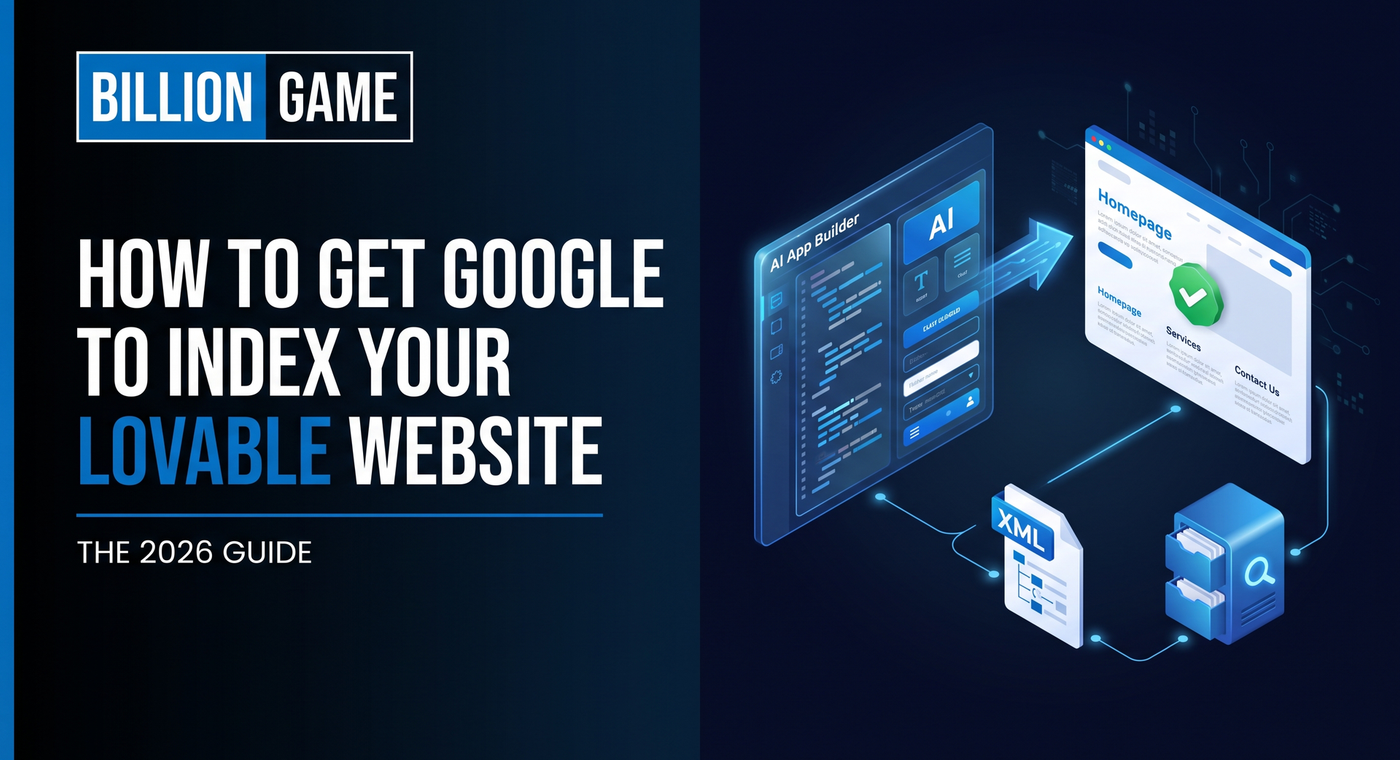
You built a site in an afternoon. Weeks later, Google still shows nothing.
Most advice you will find blames client-side rendering, and tells you Lovable sites cannot be indexed without a workaround. That advice is now out of date. If you want to get Google to index your Lovable website, the first thing to establish is which kind of Lovable app you actually have, because the platform changed how it serves pages in May 2026.
This guide walks through that change, the five checks that resolve most indexing problems, and one confusing quirk that makes perfectly healthy Lovable sites look broken in SEO tools.
Key Takeaways
- Lovable now renders on the server. Apps created from 13 May 2026 use TanStack Start, so every request returns fully rendered HTML to humans and crawlers alike.
- Older apps are handled too. React and Vite projects use on-request pre-rendering, so a verified crawler receives real HTML rather than an empty shell.
- Only published apps can be indexed. Private or unpublished projects are never indexable, whatever else you fix.
- Your SEO tool is probably lying to you. Third-party scanners are not verified crawlers, so they see the app shell while Google sees the content.
- Sitemaps and robots.txt are not always created up front. Lovable's SEO review finds what is missing and can repair most of it in one click.
- You do not need a third-party pre-rendering service. For Lovable-hosted projects, that spend is wasted.
How to Get Google to Index Your Lovable Website
The short version is five steps, and most sites only need the first three.
- Publish the app publicly, since unpublished projects can never be indexed.
- Connect a custom domain and set one primary domain.
- Run Lovable's built-in SEO review to generate the sitemap, robots.txt and metadata.
- Verify the site in Google Search Console and submit the sitemap.
- Inspect a live URL to confirm what Google actually receives.
Before working through those, though, it helps to know which rendering model your project uses, because that single fact determines whether you have a real problem or an imaginary one.
First, Check Which Kind of Lovable App You Have
Lovable changed its rendering approach partway through 2026, and the two models behave differently.
Apps created from 13 May 2026 onward use TanStack Start with server-side rendering. Every request returns fully rendered HTML, for humans and crawlers alike. In practice this removes the classic single-page application indexing problem entirely.
Apps created before that date, built on React and Vite, use on-request pre-rendering on deployed public URLs. When a verified crawler arrives, Lovable renders the page on the fly and returns the resulting HTML.
Either way, Google receives real HTML. That matters, because a great deal of published advice still assumes Lovable serves an empty JavaScript shell and recommends elaborate workarounds. Those recommendations describe a problem the platform has already solved.
Step 1: Publish the App Publicly
This sounds obvious, and it remains the single most common cause of a Lovable site missing from Google.
Only publicly published apps can be indexed. Private projects, previews and unpublished drafts are never indexable, no matter how good the content is or how many times you request indexing.
So open your project, publish it, and confirm the live URL loads in a private browser window where you are not signed in. If it does not load there, Google cannot reach it either.
Step 2: Connect a Custom Domain
You can rank on a Lovable subdomain, however a custom domain is worth setting up early.
Lovable lets you choose one primary domain, and every other connected domain then redirects to it automatically. That consolidation matters, because splitting the same content across several reachable domains divides your signals and creates duplicate content.
Set the primary domain before you build links or submit anything to Search Console. Changing it later means redirects, lost equity and a period of instability you can easily avoid.
Step 3: Run Lovable's SEO Review
Lovable does not always generate every SEO element up front. Sitemaps, robots.txt and metadata are commonly missing or out of sync on a freshly published project.
Fortunately the platform includes a review that surfaces exactly what is absent, and it can create, update or repair most items in one click. Run it and work through what it flags.
Pay particular attention to three things:
- sitemap.xml. Confirm it exists, loads at your live domain and lists the pages you actually want indexed.
- robots.txt. Make sure nothing important sits behind a Disallow rule.
- Titles and meta descriptions. Lovable generates metadata during publishing, and you can customise Open Graph tags and titles per route. Duplicate titles across routes are a frequent cause of pages being crawled and then dropped.
Step 4: Submit Your Sitemap in Google Search Console
With the site published and the sitemap live, tell Google about it.
- Add and verify the property in Google Search Console.
- Open Indexing, then Sitemaps.
- Submit sitemap.xml and check it reports Success rather than an error.
- Use URL Inspection on your homepage, then click Request Indexing.
Submission speeds up discovery, though it never guarantees indexing. Google still evaluates each page on merit, so treat this as an invitation rather than an instruction. If Search Console throws errors you cannot interpret, our Google Search Console issue fixing service exists for exactly that.
Step 5: Confirm What Google Actually Sees
This is the step most people skip, and it settles arguments quickly.
In Search Console, inspect a live URL and choose View Crawled Page. Read the HTML Google received. If your headings, body copy and links appear there, rendering is working correctly and any remaining problem lies with content quality, internal linking or simple patience.
If you want to pin down when a page entered the index, our guide on how to check when a page was indexed by Google covers the closest available methods.
Why Your SEO Tool Says Your Lovable Site Is Empty
Here is the quirk that causes needless panic, and it explains a lot of the alarmed blog posts you will find.
Lovable serves pre-rendered HTML only to verified crawlers, which includes Google, Bing, social preview bots and AI engines such as ChatGPT, Perplexity, Claude and Gemini. Third-party scanners are not on that list, so they receive the standard single-page app shell instead.
So when you run a generic SEO checker and it reports an empty page with no content, that is expected behaviour rather than a fault. Google is not seeing what your tool sees.
Trust Search Console's View Crawled Page over any third-party audit tool here. One shows you what Google actually received. The other shows you what an unverified scraper received, which is a different question entirely.
Common Reasons a Lovable Site Is Still Not Indexed
When the basics are right and pages still will not appear, work through these.
- The site is too new. New domains often wait days to weeks. That is normal rather than a fault.
- Thin content. Google indexes pages it judges worth storing. A landing page with three sentences frequently gets crawled and skipped.
- Duplicate titles across routes. Several pages sharing one title tag is a common Lovable oversight and a genuine reason for exclusion.
- No internal links. Orphan pages get discovered slowly. Link every important page from your navigation or homepage.
- A stale sitemap. New routes added after publishing may not appear until you regenerate it.
- Pages stuck at Crawled, currently not indexed. This is a quality verdict rather than a technical fault, and our guide on fixing Crawled, currently not indexed explains the usual causes.
If pages remain unindexed after you have worked through all of that, something structural is usually wrong, and our Google indexing services exist for that situation.
Lovable and AI Search Visibility
Getting indexed by Google is now only half the job, because a growing share of searches never produce a click at all.
Helpfully, Lovable's verified crawler list already includes ChatGPT, Perplexity, Claude and Gemini, so those engines receive rendered HTML rather than a blank shell. That puts Lovable sites in a better position than many custom React builds, where AI crawlers genuinely do get nothing, since they cannot execute JavaScript.
Being reachable is the floor, though, not the goal. Earning citations depends on clear question-shaped headings, direct answers in the opening lines, facts arranged in tables and lists, and consistent entity signals across your site. That work sits under AEO services, and it applies to a Lovable site exactly as it would to any other.
Frequently Asked Questions
Why is my Lovable website not showing on Google?
The most common causes are an unpublished project, a missing or unsubmitted sitemap, duplicate title tags across routes, or simply not enough time having passed. Confirm the site loads publicly in a private browser window first, since that rules out the biggest cause in seconds.
Do Lovable sites have SEO problems because they use React?
Not any more. Apps created from 13 May 2026 use server-side rendering, and older React and Vite apps use on-request pre-rendering for verified crawlers. Google receives real HTML in both cases.
How long does Google take to index a Lovable site?
Anywhere from a few days to a few weeks. Established domains publishing regularly tend to see faster indexing than brand new ones, and submitting a sitemap speeds up discovery without guaranteeing inclusion.
Do I need a pre-rendering service like Prerender.io for Lovable?
No. Lovable handles rendering for verified crawlers on hosted projects, so an external pre-rendering service adds cost without adding capability.
Why does my SEO audit tool show my Lovable pages as empty?
Because third-party scanners are not verified crawlers and receive the app shell. Check Search Console's View Crawled Page instead, which shows the HTML Google actually received.
Does Lovable create a sitemap automatically?
Not always. Sitemaps, robots.txt and metadata are not guaranteed to be generated up front, so run Lovable's SEO review, which surfaces missing items and repairs most of them in one click.
Can I rank on a lovable.app subdomain?
Yes, though a custom domain is stronger and gives you control over your search presence. Connect one and set it as the primary domain, so other connected domains redirect to it automatically.
Will requesting indexing in Search Console force Google to index my page?
No. Request Indexing places the URL in a queue rather than guaranteeing inclusion, and repeatedly submitting the same URL does not help. Fix the underlying issue instead.
Can Lovable websites be found on Google?
Yes. Apps created from 13 May 2026 use server-side rendering, and older React and Vite apps use on-request pre-rendering for verified crawlers, so Google receives real HTML either way. Only published projects can be indexed, however, so an unpublished draft never will be.
Why does my Lovable site not show up in Google search?
Most often the project was never published publicly, the sitemap has not been generated or submitted, several routes share one title tag, or the site is simply too new. Check it loads in a private browser window first.
How long does a Lovable site take to appear on Google?
A few days to a few weeks. Running Lovable's SEO review to generate the sitemap and metadata, then submitting it in Search Console, speeds up discovery considerably.
Final Thoughts
Most Lovable indexing problems are not rendering problems, whatever the older guides claim. Publish the project, connect a primary domain, run the SEO review, submit the sitemap, then confirm what Google actually receives.
Do those five things and you have covered what causes the overwhelming majority of cases. Remember too that a generic SEO tool showing an empty page proves nothing, since it was never a verified crawler in the first place.
If pages still refuse to appear after that, the issue has usually moved from technical to editorial, and it is worth reviewing content quality and internal linking before anything else. Should you want help getting Google to index your Lovable website properly, our Lovable SEO service covers the whole setup.
Sources: Lovable official documentation on SEO and AEO, covering the TanStack Start server-side rendering change of 13 May 2026, on-request pre-rendering for React and Vite apps, verified crawler handling, and sitemap, robots.txt and metadata generation.
Share
Ready to Hire an AI SEO Expert?
Book a free 30 minute AI Visibility Audit. We analyze your search visibility across Google, ChatGPT, Perplexity AI and AI Overviews.
About the author

Ganesh Shanmugam
Ganesh Shanmugam is an SEO and AEO consultant based in Chennai, India, and the founder of Billion Game — a boutique agency serving clients across the US, UK, Australia, Canada, and Ireland. He previously held SEO roles at 7 Eagles and Digital Scholar before going independent, and brings 4+ years of hands-on experience
AI SEO insights in your inbox
For growth-stage brands: organic traffic, AI citations, and strategy notes. No spam—unsubscribe anytime.
By subscribing you agree to our Privacy Policy.