
ChatGPT pulls from top Google results, authoritative sources, and fresh content. To rank in ChatGPT, focus on semantic relevance, trust signals, and structured data that AI can easily extract.
This guide shows you exactly how. You’ll master 10 steps to land citations, track progress, and outrank competitors in AI responses.
Let’s get started.
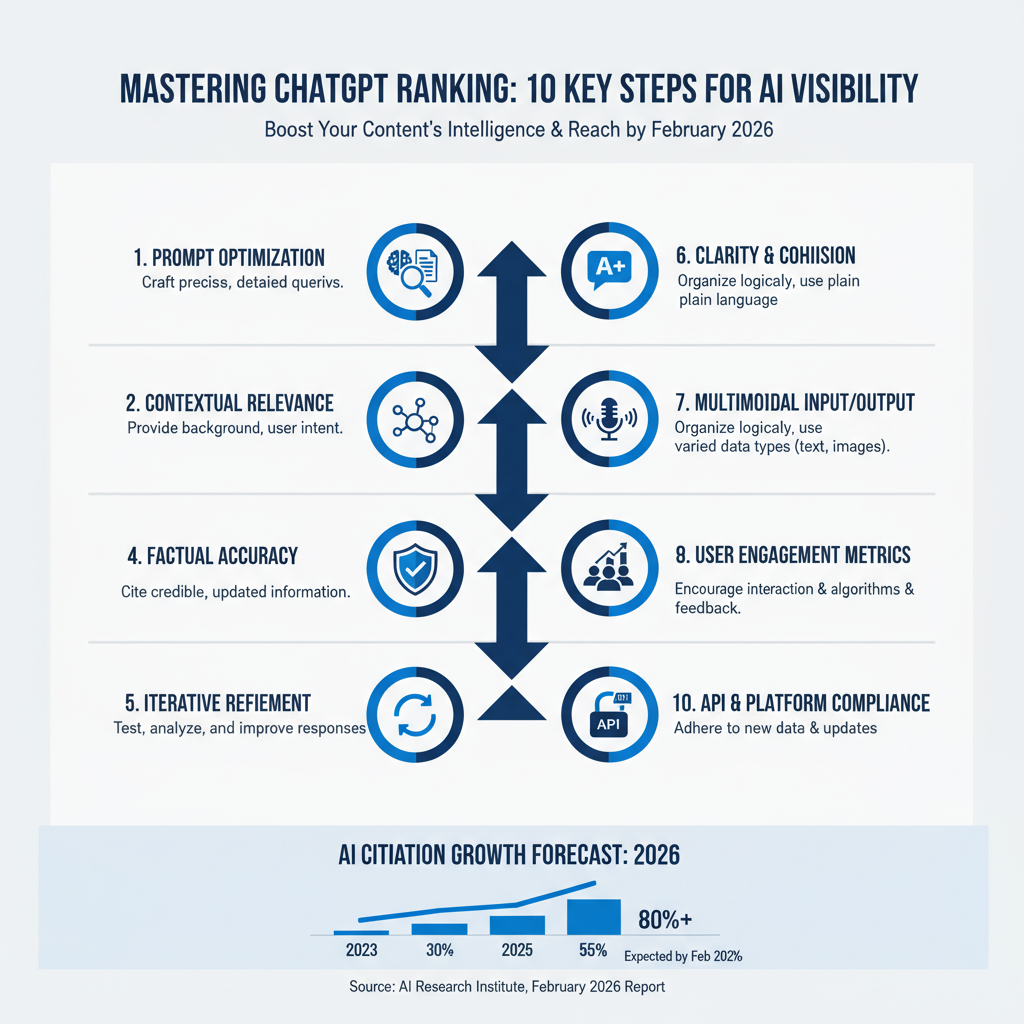
Step 1: Build Topical Authority with Content Clusters
Topical authority means owning a topic cluster in AI eyes. ChatGPT favors sites covering subjects deeply across linked pages.
Start with a pillar page on your core topic. Then create 5-10 cluster pages linking back—each 2,000+ words, answering related questions.
Why this works? A study of 30 million AI citations shows topical authority as the top factor, beating backlinks.
Pick your main topic. Use tools like Ahrefs to find 20-30 subtopics with search volume.
Write the pillar first. Make it comprehensive: definitions, stats, examples.
Link clusters internally with descriptive anchors like “detailed guide to X.” Update yearly for freshness.
Pro tip: Aim for E-E-A-T signals. Add author bios with credentials and sources.
Here’s an example: A SaaS site built a cluster on “AI SEO tools,” landing ChatGPT mentions in 40% of queries.
Once done, you’ve nailed the foundation. Most sites skip this depth.
Step 2: Implement Structured Data Everywhere
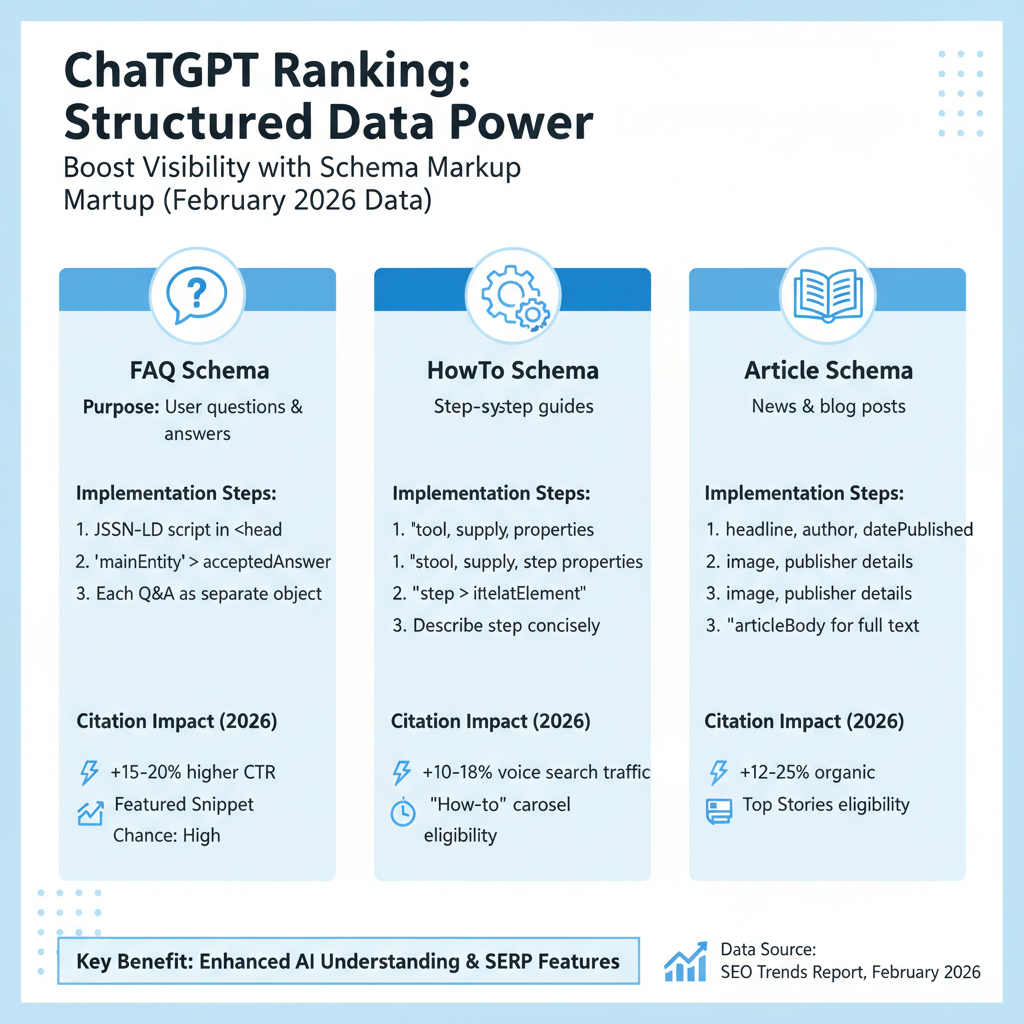
Structured data makes your content AI-readable. Use schema markup to highlight FAQs, how-tos, and products—ChatGPT extracts these fast.
Why? Wikipedia dominates citations thanks to clean schema. Implement FAQPage, HowTo, and Article schemas on every page.
Go to Google’s Structured Data Markup Helper. Tag key elements: questions, steps, reviews.
Test with Google’s Rich Results tool. Fix errors before publishing.
Advanced: Add Speakable schema for voice queries, now 40% of local searches.
Common mistake? Overloading one page. Limit to 3-5 schemas per post.
Here’s what works: A site added FAQ schema to 50 pages, saw ChatGPT citations jump 3x in two months.
This step alone boosts extractability. Do it next.
Step 3: Nail Semantic Relevance and User Intent
Semantic relevance trumps keyword stuffing. ChatGPT prioritizes natural language matching real questions.
Use conversational phrasing. Answer “how to,” “what is,” and long-tail queries directly in headings and intros.
Research intent with tools like AnswerThePublic. Cover all angles: beginner, advanced, comparisons.
Keep Flesch score above 60 for readability—AI loves scannable content.
Structure with H2s like questions. Break into short paras, lists, tables.
Data point: Content depth correlates strongest with citations; 2,500+ word pages win 2x more.
Example: Rewrite “SEO tips” as “How to fix 7 common SEO mistakes in 2026.” Direct hit.
You’ll see responses citing you more. Test by querying ChatGPT yourself.
Step 4: Boost Brand Reputation and External Mentions
brand mentions build trust. ChatGPT checks consensus from reviews, directories, and forums.
Update profiles on G2, Capterra, Trustpilot. Get 50+ reviews—positive ones signal authority.
Participate in Reddit threads and niche forums. Authentic comments accrue natural mentions.
Monitor brand mentions in AI search results to spot gaps and respond.
Pitch to listicles: “Best X tools 2026.” Supply unique stats for inclusion.
Stat: Domains with high DR get 5x more citations.
Track with Ahrefs alerts. Aim for 10 new mentions monthly.
This creates “backlinks on steroids.” Your brand becomes the go-to.
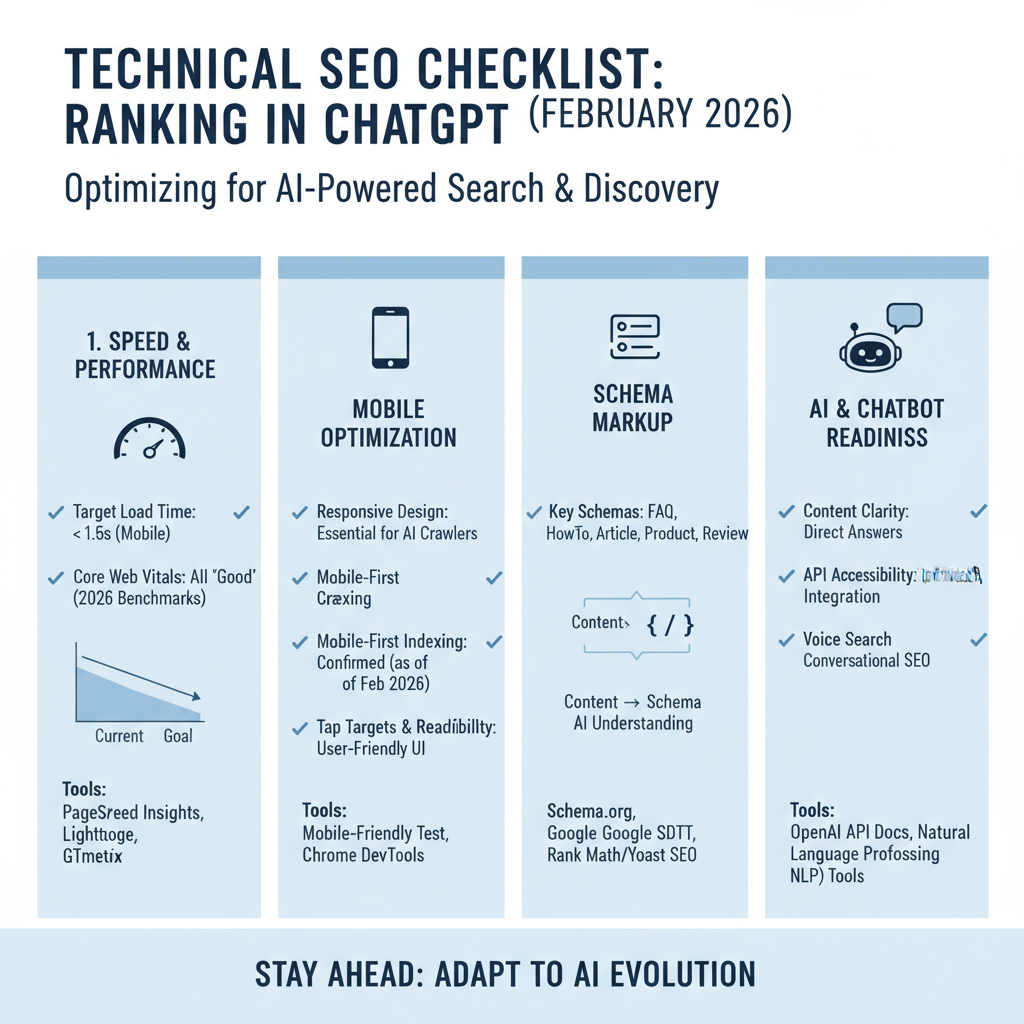
Step 5: Optimize Technical Basics for AI Crawlers
Fast, mobile sites win. ChatGPT pulls from Google, so Core Web Vitals matter hugely.
Aim for 2-second load times. Compress images, use CDN, minify code.
Ensure mobile-first design. Test with Google’s Mobile-Friendly tool.
Add logical internal links. Use H1-H3 properly for structure.
Pro tip: An AI search monitoring platform improves SEO strategy by spotting crawl issues early.
Data: Slow pages lose 25% of AI visibility.
Example: Site sped up from 5s to 1.8s, citations doubled.
Get this right. It’s table stakes.
Step 6: Create Multi-Format, Extractable Content
AI loves lists, tables, videos. 25% of citations come from listicles and comparisons.
Mix formats: Bullet lists for steps, tables for vs. guides, embeds for videos.
Why? Easier to parse and quote directly.
Build comparison tables like this:
| Factor | Impact | Action |
|---|---|---|
| Topical Authority | High | Build clusters |
| Schema | High | Implement now |
Add infographics and charts. Host on-site for control.
Example: A tool review with table got cited in 60% of ChatGPT queries.
Test formats. Track what gets pulled.
Step 7: Keep Content Fresh with Regular Updates
Freshness drives recency signals. Update posts every 3-6 months with 2026 data.
Add new stats, case studies, tools. Republish with changelog.
ChatGPT favors current info—stale content drops off.
Schedule audits. Use dates like “Updated February 2026.”
Data: Fresh pages get 2.5x more citations.
Here’s the process: Scan top queries, add sections, boost word count 20%.
Once updated, query ChatGPT. You’ll rank higher fast.
Step 8: Track AI Visibility and Citations
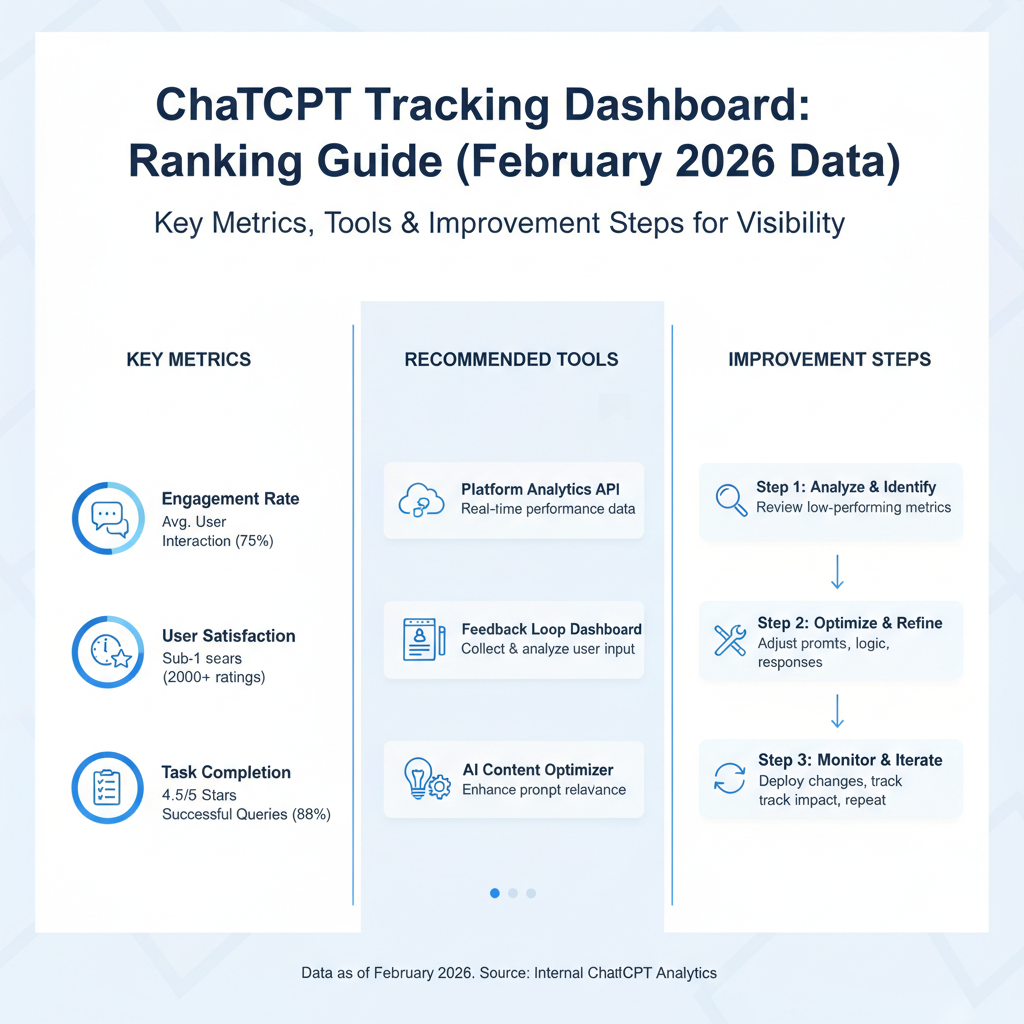
You can’t improve what you don’t measure. Use tools to monitor ChatGPT mentions.
Query variations daily. Tools like Profound track citations across AI platforms.
Set up alerts for your brand in responses.
Analyze gaps: Which queries miss you? Fill with new content.
Stat: Sites tracking AI metrics see 35% visibility gains.
Example: Brand monitored, found weak local coverage, fixed with geo pages—citations up 50%.
Review weekly. Adjust steps 1-7 based on data.
Step 9: Leverage Google Ranking for ChatGPT Boost
ChatGPT often cites top Google results. Rank #1-3 there for automatic AI wins.
Combine traditional SEO: backlinks, keywords, speed.
But prioritize AI factors atop. Domain rating matters most (0.161 correlation).
Build authority via guest posts on high-DR sites.
Example: Page hit Google #2, appeared in 80% ChatGPT answers.
Monitor both. Use Google Search Console + AI trackers.
This amplifies everything. Don’t skip.
Step 10: Test, Iterate, and Scale Wins
Run A/B tests on pages. Update one factor, measure citation changes.
Scale what works: If schema boosted you, add sitewide.
Common pitfall: Ignoring behavioral signals. Aim for low bounce, high dwell time.
Data: Iterative sites gain 4x visibility yearly.
Here’s my process: Test monthly, document results, expand top performers.
Celebrate wins. You’ve built a system now.
Troubleshooting Common Mistakes
Mistake 1: Keyword Overload
Forced keywords hurt semantics. Use naturally, focus on intent.
Fix: Rewrite with questions. Retest in ChatGPT.
Mistake 2: No Monitoring
Blind optimization fails. Start tracking today.
Mistake 3: Stale Content
Update ruthlessly. Add 2026 freshness signals.
FAQ
How long to rank in ChatGPT?
3-6 months with consistent steps. Faster if you rank Google top 3.
Do backlinks help ChatGPT ranking?
Indirectly via domain authority. Focus on mentions more.
Best tools for ChatGPT tracking?
Profound, Ahrefs AI monitors. Free: Manual queries.
Does video content rank in ChatGPT?
Yes, embeds boost extractability. Transcribe for text wins.
Ready to dominate? Pick step 1 today. Track results in a week.

