The 4 Best SEO Tools for 2026
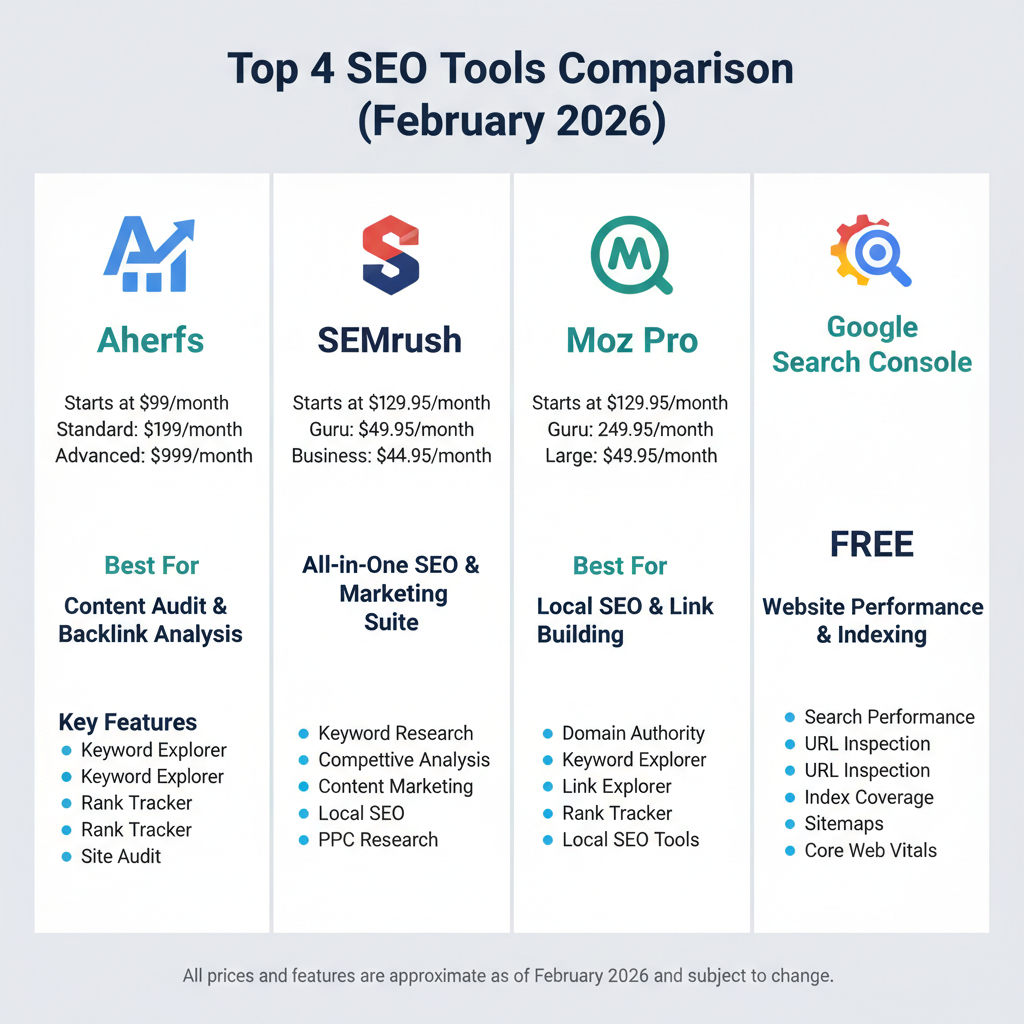
The top 4 SEO tools in 2026 are Semrush, Ahrefs, Surfer SEO, and SE Ranking. These platforms dominate because they combine keyword research, competitor analysis, content optimization, and rank tracking in ways that actually move the needle for your rankings.
Most SEO teams use one of these four as their primary platform. The choice depends on your budget, team size, and whether you prioritize all-in-one features or specialized depth in one area.
Here’s what separates the best from the rest: they give you real data (not just AI guesses), they integrate with your workflow, and they deliver ROI that justifies the cost.
1. Semrush: Best All-in-One SEO Platform
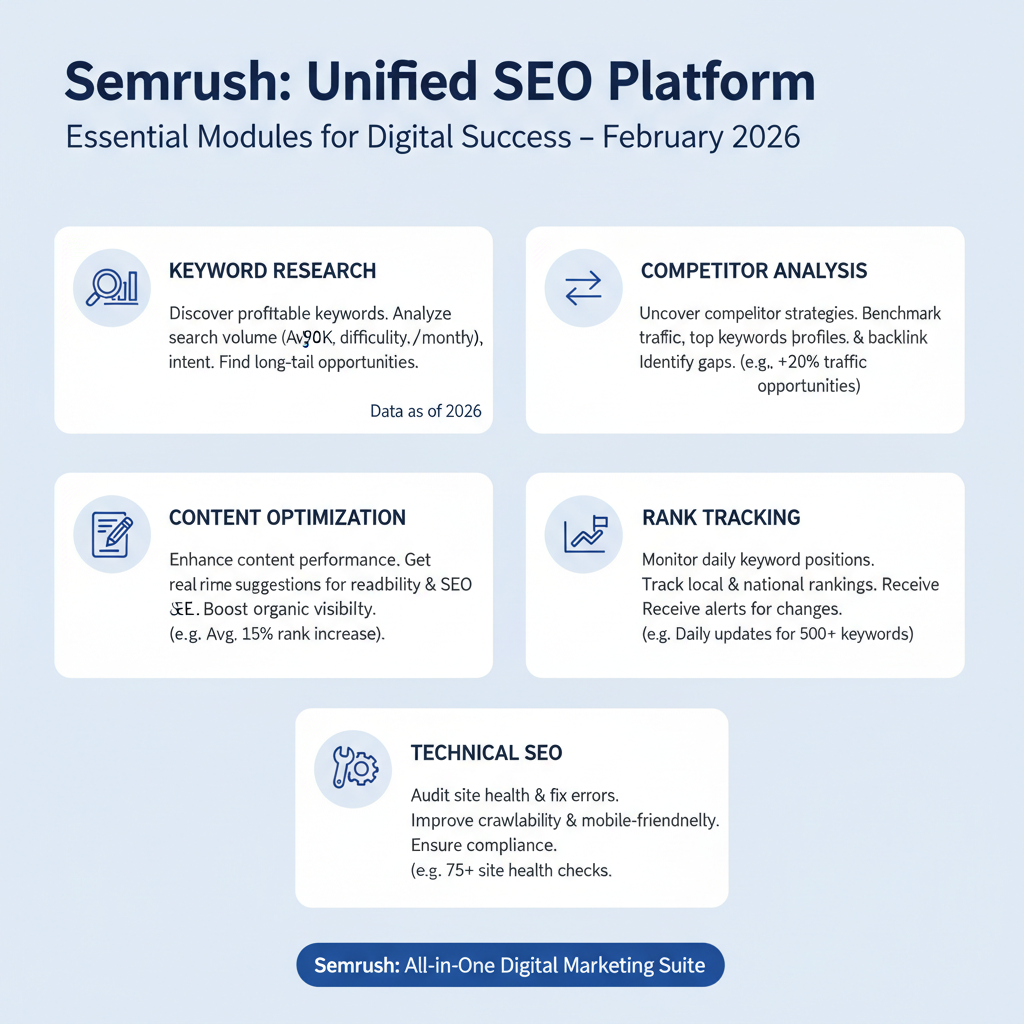
Semrush is the industry leader for teams that want one platform to handle everything. It combines keyword research, competitor analysis, content optimization, rank tracking, technical audits, and even PPC and social media management in a single dashboard.
By 2026, Semrush has evolved into a predictive intelligence platform. It doesn’t just show you what competitors are doing—it uses AI to predict their next moves and identify ranking opportunities before they become obvious.
The platform excels at content gap analysis. You can see exactly which topics your competitors rank for that you don’t, then get AI-powered recommendations on how to compete for those keywords.
Semrush’s AI writing assistant helps you draft meta descriptions, title tags, and content outlines directly in the platform. This saves time when you’re managing multiple projects.
The rank tracking feature monitors your keywords across Google and AI search engines. You get daily updates on position changes, search volume trends, and competitor movements for each keyword.
Pricing starts at $139.95 per month for the Standard plan, which includes up to 5 projects and 500 keywords to track daily. The Professional plan ($249.95/month) adds 15 projects and 1,500 daily tracked keywords. Enterprise plans offer unlimited projects and custom features.
The learning curve is moderate to advanced. New users need 2–3 weeks to feel comfortable with the interface, but the payoff is worth it because you’re not switching between five different tools.
One trade-off: Semrush’s backlink data is solid but not as deep as Ahrefs. If backlink analysis is your primary need, Ahrefs edges it out. But for overall SEO management, Semrush wins.
2. Ahrefs: Best for Backlink Research and Competitor Analysis
Ahrefs is the gold standard for backlink analysis and deep competitor research. If you need to understand your competitor’s link profile, identify link-building opportunities, or analyze content performance across the web, Ahrefs delivers the most accurate data.
The platform crawls over 800 billion web pages and maintains one of the largest backlink databases in the industry. This means when you’re researching competitors, you’re working with comprehensive, real-world data.
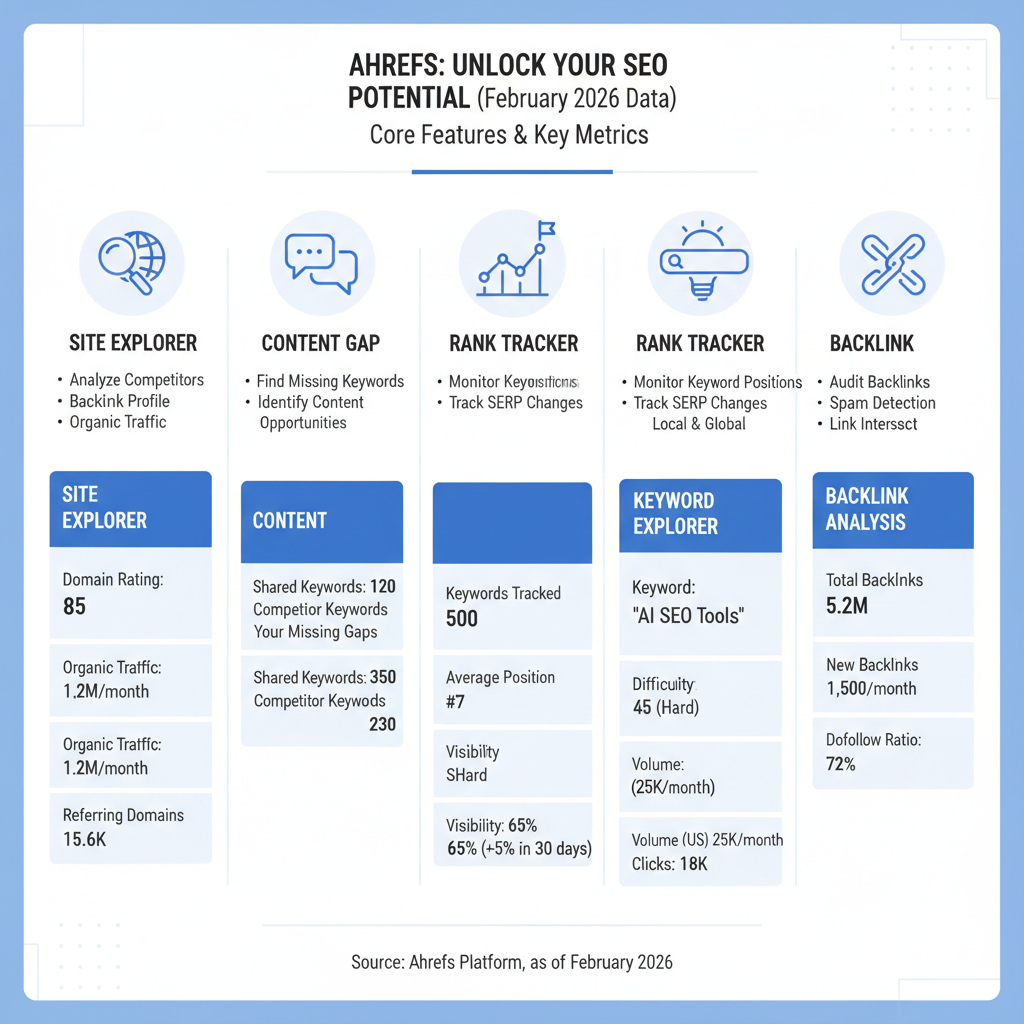
Ahrefs’ Site Explorer tool shows you exactly which pages on a competitor’s site get the most traffic, which keywords they rank for, and which backlinks point to them. You can then reverse-engineer their strategy and find gaps they’ve missed.
The Content Gap feature is particularly powerful. It identifies keywords your competitors rank for that you don’t, ranked by search volume and difficulty. This is how you find quick wins in your niche.
Ahrefs recently added AI-powered features like Brand Radar for keyword recommendations and AI Content Helper, which shows gaps in your content compared to top-ranking competitors. These features help you optimize before you publish.
Rank tracking in Ahrefs monitors your keywords daily and shows you position changes, search volume shifts, and competitor movements. The interface is clean and easy to scan for quick insights.
Pricing starts at $99 per month for the Lite plan (up to 5 projects, 500 tracked keywords). The Standard plan ($199/month) includes 15 projects and 2,000 tracked keywords. The Advanced plan ($399/month) offers 30 projects and 5,000 tracked keywords.
Ahrefs is easier to learn than Semrush. Most users feel productive within a week because the interface is intuitive and the data is presented clearly.
The main limitation: Ahrefs doesn’t include content optimization, PPC management, or social media tools. You’ll need a separate tool like Surfer SEO for AI-powered content optimization. But if you’re a data purist who wants the most reliable link index, Ahrefs is your choice.
3. Surfer SEO: Best for Content Optimization and On-Page SEO
Surfer SEO is the specialist tool for content optimization. If your priority is writing content that ranks, Surfer gives you a content score that predicts how well your page will perform before you publish.
The platform analyzes the top 10 ranking pages for your target keyword and extracts on-page SEO signals: word count, heading structure, keyword density, semantic keywords, readability, and more. It then grades your content against these signals in real time.
As you write in Surfer’s editor, you get live feedback. The tool tells you if your word count is too low, if you’re missing key semantic keywords, or if your headings don’t match the pattern of top-ranking pages. This removes the guesswork from content creation.
Surfer’s SERP analyzer shows you exactly what Google is ranking for your keyword. You see the top 10 pages, their word counts, backlink counts, and domain authority. This helps you understand the competitive landscape before you start writing.
The platform includes an AI writing assistant that helps you draft outlines, write sections, and optimize existing content. It’s not a replacement for human writing, but it speeds up the process significantly.
Surfer also tracks your content performance over time. You can see how your pages rank for target keywords and get recommendations on how to improve them if they’re not performing.
Pricing is $99 per month for the Essentials plan (up to 5 projects, 500 keywords tracked). The Pro plan ($219/month) includes 30 projects and 2,000 tracked keywords. The Business plan ($399/month) offers unlimited projects and 5,000 tracked keywords.
Surfer is beginner-friendly. The interface is clean, the scoring system is easy to understand, and the recommendations are actionable. You don’t need SEO expertise to use it effectively.
The trade-off: Surfer doesn’t do backlink analysis or competitor research at the depth that Ahrefs does. It’s a content-first tool, not a full-stack platform. Most teams pair Surfer with Ahrefs or Semrush for complete coverage.
4. SE Ranking: Best Budget-Friendly All-in-One Tool
SE Ranking delivers 70% of what Semrush and Ahrefs offer at a fraction of the cost. If you’re a freelancer, startup, or small team with a tight budget, SE Ranking is the smart choice.
The platform includes keyword research, rank tracking, technical SEO audits, competitor analysis, and backlink monitoring. It won’t have every bell and whistle of the enterprise tools, but it covers the essentials that actually move rankings.
SE Ranking’s rank tracker monitors your keywords daily across Google and shows you position changes, search volume trends, and competitor movements. The interface is straightforward—you see your rankings at a glance without unnecessary complexity.
The technical SEO audit crawls your site and identifies issues: broken links, duplicate content, missing meta tags, mobile usability problems, and more. You get a priority list of fixes that will have the biggest impact on your rankings.
Keyword research in SE Ranking uses the Moz Pro API, which means the data is reliable even though it’s not as deep as Ahrefs or Semrush. You get search volume, keyword difficulty, CPC estimates, and related keywords—everything you need to find opportunities.
The platform includes a content optimization tool that grades your pages against top-ranking competitors. It’s not as aggressive as Surfer, but it gives you solid recommendations on word count, keyword usage, and heading structure.
Pricing starts at $52 per month for the Essential plan (up to 5 projects, 500 keywords tracked daily). The Pro plan ($119/month) includes 30 projects and 2,000 tracked keywords. The Business plan ($259/month) offers unlimited projects and 5,000 tracked keywords.
SE Ranking is the easiest to learn of the four tools. The interface is intuitive, the features are straightforward, and there’s minimal bloat. You can be productive on day one.
The limitation: SE Ranking’s data depth is shallower than Semrush or Ahrefs. Backlink data is limited, competitor analysis is basic, and the AI features are minimal. But for the price, it’s exceptional value. Many freelancers and small agencies use SE Ranking as their primary tool and supplement with free SEO tools like Google Search Console for additional insights.
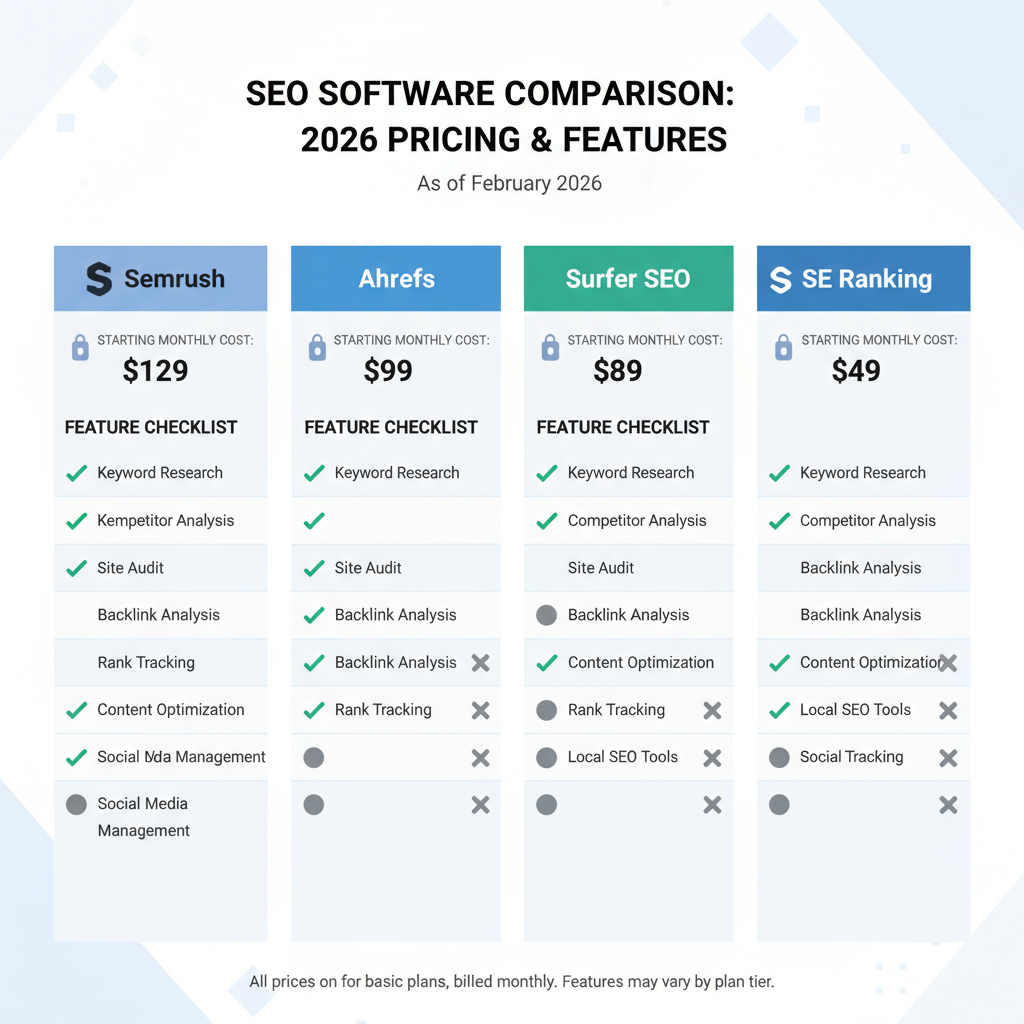
Which Tool Should You Actually Choose?
The answer depends on three factors: your budget, your team size, and your primary SEO priority.
Choose Semrush if: You want one platform to handle keyword research, competitor analysis, content optimization, rank tracking, and technical audits. You have a budget of $140+ per month and you want AI-powered features built in. You manage multiple projects or clients.
Choose Ahrefs if: Backlink analysis and competitor research are your top priorities. You want the most accurate link data and the deepest competitor insights. You’re willing to use a separate tool for content optimization. Your budget is $99+ per month.
Choose Surfer SEO if: Content optimization is your main focus. You write a lot of content and want real-time feedback on how well it will rank. You’re willing to use a separate tool for backlink research. Your budget is $99+ per month.
Choose SE Ranking if: You’re bootstrapped or just starting out. You need a solid all-in-one tool that covers the basics without the premium price tag. You’re comfortable with less data depth in exchange for lower cost. Your budget is $52+ per month.
Most professional SEO teams use a combination. The typical stack is Semrush or Ahrefs for research, Surfer for content optimization, and Google Search Console for first-party data. That’s roughly $240–$340 per month for a complete setup.
If you’re on a tight budget, pair SE Ranking ($52/month) with a free content optimization tool and ChatGPT for writing assistance. You’ll spend under $100 per month and still have a functional SEO toolkit.
The Essential Stack for Most Teams
Research shows that three tools handle 90% of SEO work for most businesses. This setup balances high-quality data with streamlined workflows.
Research & Tracking: Pick Semrush or Ahrefs as your primary database for finding keywords and checking backlinks. This is your source of truth for competitive intelligence.
Content Optimization: Use Surfer SEO to grade your writing and ensure it’s ready to rank. This prevents you from publishing content that won’t perform.
AI Assistant: Use ChatGPT Plus for building outlines, writing meta tags, and cleaning up data. It’s versatile and integrates with your workflow.
Total Cost: Roughly $240–$340 per month depending on which research tool you choose and which plan tier you select.
This stack works because each tool specializes in what it does best. You’re not forcing one platform to do everything—you’re using the right tool for each job.
FAQ: Common Questions About Top SEO Tools
Is Semrush or Ahrefs better for AI SEO?
Semrush leads in AI-driven automation and all-in-one marketing features. Ahrefs is better for backlink data accuracy and deep keyword research. In 2026, Semrush is the choice for teams wanting AI writing assistants and co-pilot features. Ahrefs is for data purists who want the most reliable link index.
What’s the best tool for content optimization?
Surfer SEO and Clearscope are the top contenders. Surfer is more popular for aggressive optimization and affordable pricing. Clearscope is preferred by enterprise teams for its topical map approach. If you’re on a budget, NeuronWriter provides similar features at a lower price point.
Can I use free SEO tools instead of paid ones?
Yes, but with limitations. Google Search Console and Google Keyword Planner are free and reliable for first-party data and search volume estimates. However, they don’t include competitor analysis or backlink research. Most professionals use free tools to supplement paid platforms, not replace them.
How much should I spend on SEO tools?
A solo freelancer can start with SE Ranking ($52/month). A small team should budget $150–$250 per month for a solid toolkit. Agencies and larger teams typically spend $300–$500+ per month for multiple tools and higher plan tiers.
Do I need all four of these tools?
No. Most teams pick one primary platform (Semrush or Ahrefs) and add Surfer SEO for content optimization. That covers 95% of SEO work. The fourth tool (SE Ranking) is useful if you’re on a budget or managing many small projects.

