ChatGPT processes over 2.5 billion prompts daily. 800 million people use it weekly. Google AI Overviews appear in 55% of searches.
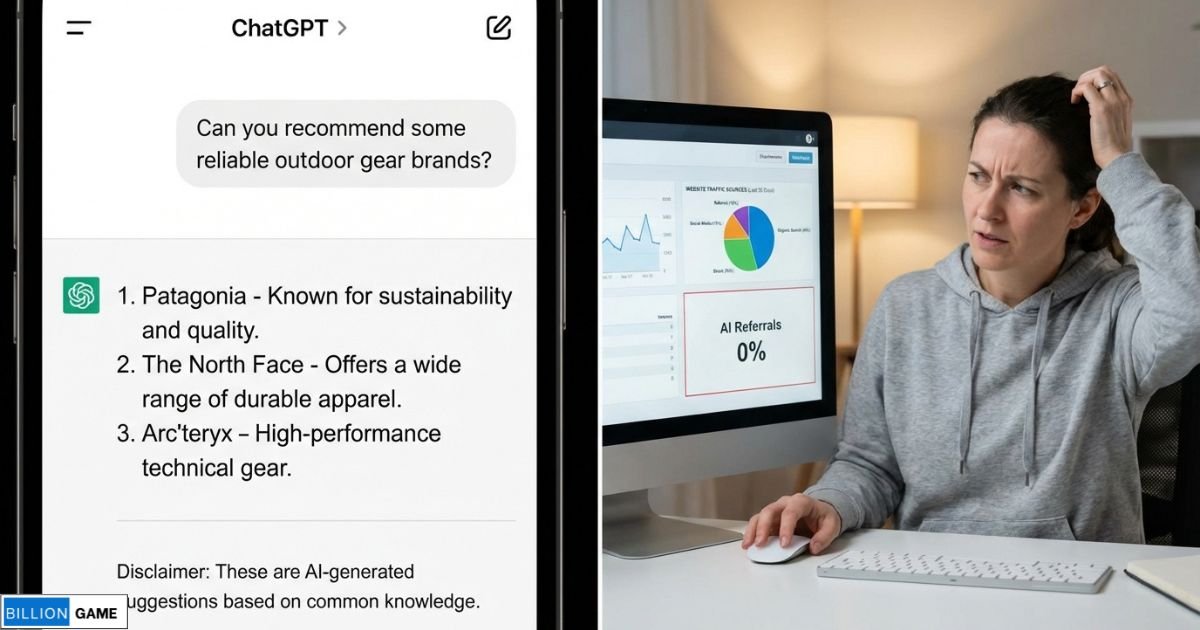
When someone asks an AI, “What’s the best CRM for small businesses?” or “Which HVAC company should I hire?”, your brand is either mentioned or it isn’t.
If you’re not tracking that, you’re flying blind.
Why You Should Monitor Brand Mentions in AI Search Results
Here’s the situation in 2026.
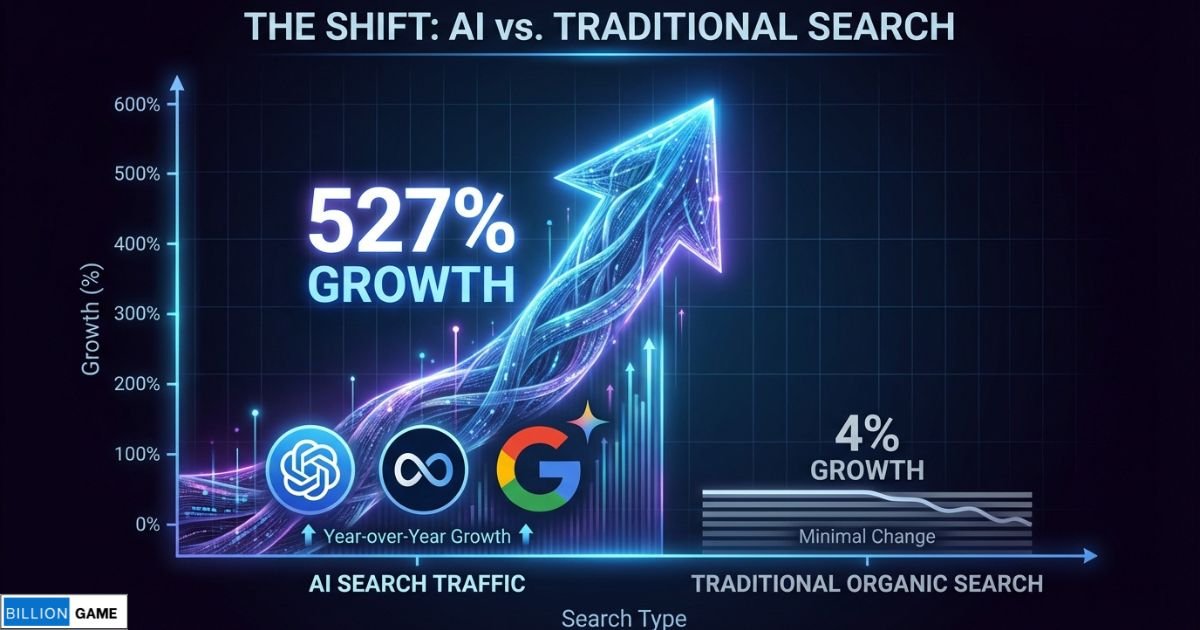
AI search traffic grew 527% year over year, while traditional organic traffic grew less than 4%. Over 70% of searches now end without a click because users get answers directly from AI.
If your brand isn’t mentioned in those AI answers, you don’t exist to a massive and growing audience.
This isn’t theory. Adobe surveyed 800 consumers in 2025 and found that 36% discovered a new product or brand through ChatGPT. Among Gen Z users, that number jumped to 47%.
28% of Gen Z now start their searches in ChatGPT, bypassing Google entirely.
The shift is happening. The question is whether you’re tracking it.
Your Traditional SEO Tools Don’t Capture This
Google Search Console shows your organic rankings. Analytics shows your traffic. Neither shows whether ChatGPT recommended your competitor instead of you.
Traditional SEO tools measure website traffic, backlinks, and keyword rankings. They tell half the story.
They can’t read AI model outputs. They can’t track prompt-level mentions. They can’t tell you when an AI platform misrepresents your product or recommends a competitor.
A brand can rank #1 on Google and still be completely absent from Perplexity’s recommendations. That’s happening right now to businesses that don’t know it.
5 Reasons to Monitor AI Brand Mentions
1. You’re Losing Customers Without Knowing It
When a potential customer asks ChatGPT, “What’s the best project management tool for remote teams?” and your tool isn’t mentioned, you just lost a sale.
The customer never reached your website. They never saw your ads. They never had a chance to consider you.
AI search gives one synthesized answer. If you’re not in it, you’re invisible.
2. AI Platforms Give Inconsistent Answers
Your brand might appear as the top recommendation in Gemini, be entirely absent in ChatGPT, and get miscategorized in Perplexity. All in the same week.
One agency tested buyer-intent prompts and discovered that two competitors were consistently recommended by AI platforms, while they were completely ignored, despite having stronger traditional SEO.
Without monitoring, you won’t know which platforms recommend you, which ignore you, and which get your information wrong.
3. AI Answers Change Constantly
AI Overview content changes about 70% of the time for the same query. When it updates, 45.5% of citations get replaced with new ones.
Only about 30% of brands stay visible from one snapshot to the next.
What worked last month might not work today. Continuous monitoring is the only way to know your current status.
4. Misinformation Spreads Fast
Manual tracking might reveal that an AI describes your company as “open source” when it isn’t. Or states you serve a market you don’t. Or misquotes your pricing.
These errors shape customer perception before they ever reach your website. If you don’t catch them, they continue spreading.
5. Competitors Are Already Tracking This
Brands that understand AI visibility are actively optimizing for it. They’re creating content designed to be cited. They’re monitoring which queries they win and which they lose.
While you’re focused only on Google rankings, they’re capturing visibility across ChatGPT, Perplexity, Claude, Gemini, and AI Overviews.
The gap widens every day you wait.
What AI Brand Monitoring Actually Shows You
When you monitor brand mentions in AI search results, you get:
Share of Voice: The percentage of relevant queries where your brand appears versus competitors. If competitors show up in 70% of industry prompts and you show up in 20%, you have a visibility problem.
Citation Sources: Which of your pages do AI platforms actually cite? This tells you what content performs in AI search versus what just ranks on Google.
Sentiment Analysis: How AI describes your brand. Is the context positive, neutral, or negative? Are the descriptions accurate?
Competitor Intelligence: Which brands dominate the queries your customers ask? What content gets them cited?
Platform Differences: Your visibility may vary dramatically across ChatGPT, Perplexity, Gemini, Claude, and Google AI Overviews. Each platform uses different data sources and logic.
The Traffic Numbers Tell the Story
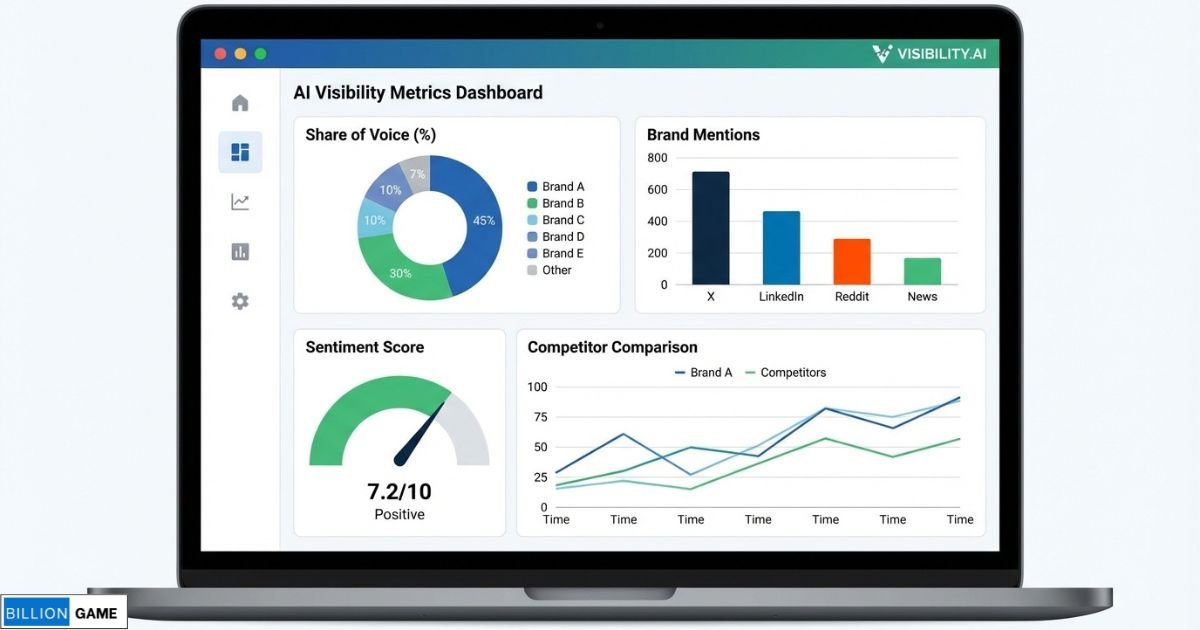
AI referral traffic is still small compared to traditional search. AI platforms drive about 1% of overall web traffic across major industries.
But that traffic behaves differently.
Visitors from AI platforms spend 68% more time on websites than those from organic search. AI tools act as intent filters, sending users who are already further along in their decision journey.
And the growth rate is explosive. ChatGPT’s share of internet traffic doubled in just four months of 2025. Gemini referral traffic grew 388% in the same period.
The brands capturing this traffic now are building advantages that compound over time.
ChatGPT Dominates AI Search
If you only track one platform, make it ChatGPT.
ChatGPT drives 77.97% of all AI referral traffic. It has an 81% market share among AI chatbots. It processes 2.5 billion prompts daily with 800 million weekly users.
Perplexity comes second at 15% of AI traffic. Gemini holds about 6.4%.
ChatGPT isn’t just another search engine. It’s becoming the default way millions of people find information, make decisions, and discover brands.
How to Start Monitoring
You have two options.
Manual Tracking: Create a spreadsheet. List the prompts your customers might ask. Query ChatGPT, Perplexity, Gemini, and Claude regularly. Record whether your brand appears, what competitors appear, and what content gets cited.
This works for establishing a baseline. It’s free and gives you direct visibility into what AI says about your brand.
AI Visibility Tools: Platforms like Otterly AI, LLMrefs, Frase AI Visibility, Semrush AI Toolkit, and Ahrefs Brand Radar automate this tracking across multiple AI platforms.
These tools monitor continuously, track competitors, analyze sentiment, and provide actionable recommendations. They cost money but save significant time and provide deeper insights. For a comprehensive list, check out our guide to 30 AI SEO tools that can help with visibility tracking and optimization.
Most businesses start with manual tracking to understand the landscape, then adopt tools as AI visibility becomes a priority.
What to Do With the Data
Monitoring alone doesn’t improve your visibility. You need to act on what you learn.
If you’re absent from key queries, create content designed to be cited. AI platforms favor comprehensive answers, clear explanations, data-driven content, and visible structure with headers and FAQs.
To understand how these platforms work and how to optimize for them, read our guide on how an AI search monitoring platform can improve your SEO strategy.
If competitors dominate certain prompts, analyze what content they’re getting cited for. Build something better.
If AI misrepresents your brand, update your website content to clarify. Ensure your most authoritative pages have accurate, current information that AI can cite. Implementing schema markup helps AI platforms understand your content better and increases citation accuracy.
If one platform ignores you while others recommend you, investigate why. Different AI platforms use different data sources and update cycles.
The Bottom Line
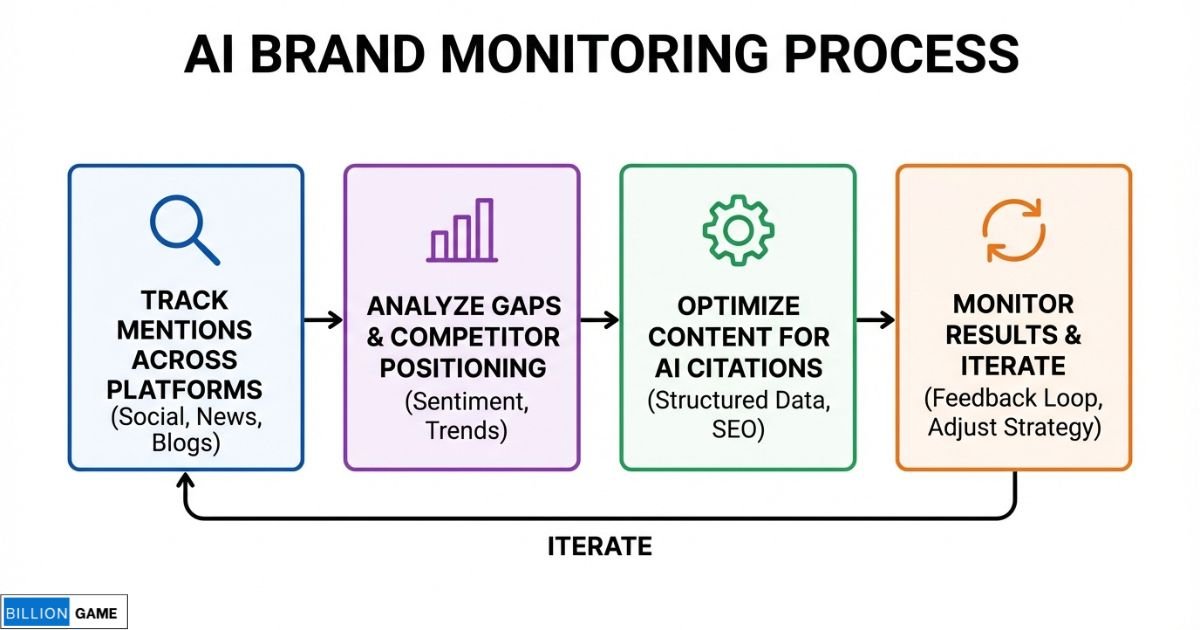
AI search has created a new visibility layer. Brands appear or don’t appear in AI-generated answers. There’s no middle ground.
70% of searches now end without a click. If you’re only tracking traditional rankings, you’re missing where customer decisions actually happen.
ChatGPT has 800 million weekly users. 36% of consumers discovered new brands through it last year. 28% of Gen Z starts their search there, not Google.
This is happening whether you track it or not. The only question is whether you’ll see it.
Monitor your brand mentions in AI search results. Know where you stand. Then optimize to appear where your customers are actually looking.
FAQs
What does it mean to monitor brand mentions in AI search results?
It means tracking whether and how AI platforms like ChatGPT, Perplexity, Gemini, and Google AI Overviews mention your brand when users ask relevant questions. This includes tracking citation frequency, sentiment, accuracy, and competitive positioning across multiple AI platforms.
Which AI platforms should I monitor?
Start with ChatGPT since it drives 78% of AI referral traffic. Then add Perplexity (15% of traffic), Google AI Overviews and AI Mode, Gemini, Claude, and Microsoft Copilot. Each platform has different data sources and may treat your brand differently.
Can I use Google Search Console to track AI visibility?
No. Google Search Console tracks traditional search rankings and clicks. It doesn’t show whether your brand appears in AI-generated answers, ChatGPT responses, or Perplexity citations. You need dedicated AI visibility tools or manual tracking for this data.
How much traffic comes from AI search platforms?
AI platforms currently drive about 1% of overall web traffic, but this is growing rapidly. AI referral traffic grew 527% year over year while traditional organic traffic grew less than 4%. Visitors from AI platforms also spend 68% more time on websites than organic search visitors.
What tools can I use to track AI brand mentions?
Dedicated tools include Otterly AI, LLMrefs, Frase AI Visibility, and Rankscale. Major SEO platforms with AI tracking features include Semrush AI Toolkit, Ahrefs Brand Radar, SE Ranking AI Overviews Tracker, and Mangools AI Search Grader.
How often do AI search results change?
Frequently. AI Overview content changes about 70% of the time for the same query. When answers update, 45.5% of citations get replaced. Only about 30% of brands maintain consistent visibility from one snapshot to the next. Continuous monitoring is necessary.
Why do some brands appear in AI answers while others don’t?
AI platforms cite content that is comprehensive, well-structured, authoritative, and frequently referenced across the web. Brands with strong digital presence, quality content, positive reviews, Wikipedia pages, and consistent information across platforms tend to get cited more often.
Is AI search monitoring worth the investment?
If AI platforms recommend your competitors instead of you, potential customers never reach your website. You lose sales without knowing it. Monitoring is the only way to identify these gaps and take corrective action. The ROI depends on how much business you’re losing to AI invisibility.

